
Every dollar you invest is a dollar your student won’t have to repay
The average student in the Class of 2021 had $39,351 in student loan debt1. The monthly payment on that could be $437/month … for ten years. That’s money a graduate might not be able to put toward a new home, beginning a business or starting a family.
It’s never too early to start saving for college
If you begin now and make regular contributions into a savings plan from State Farm, even modest amounts can grow significantly over time.
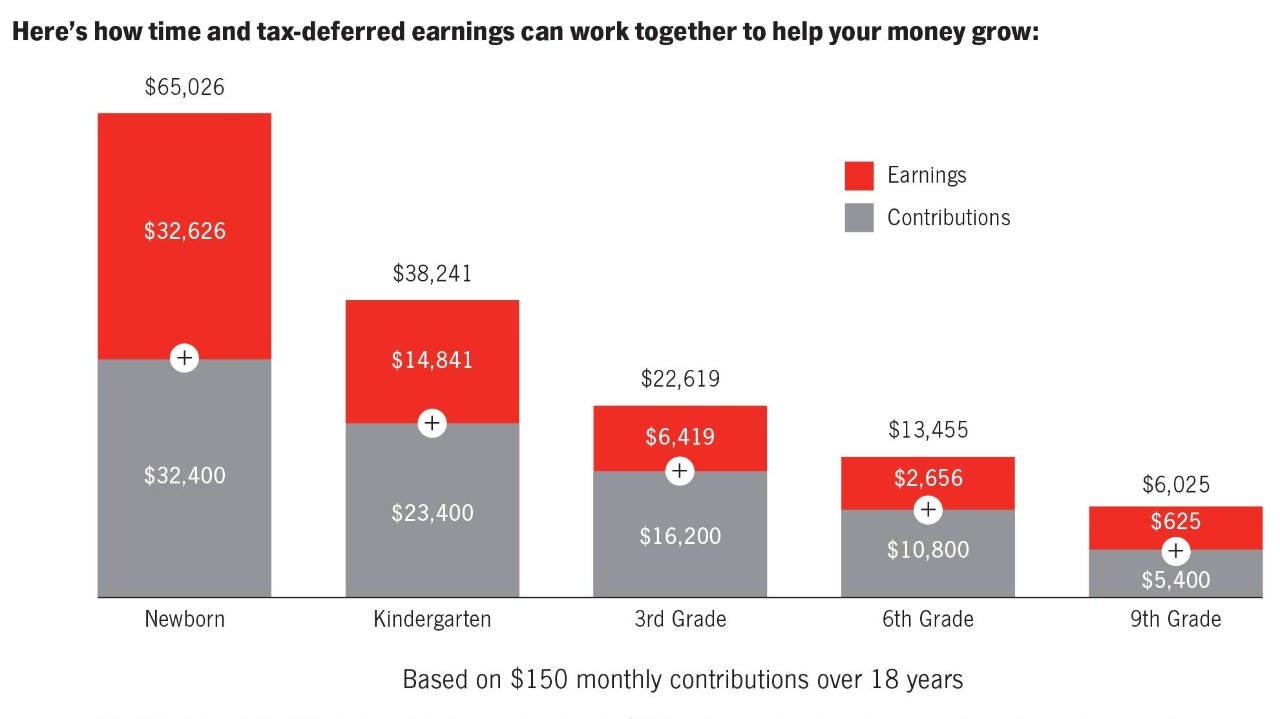
Hypothetical Illustration: This chart illustrates an investment of $150/month (on the first day of the month) into a college savings account that earns 7% per year, compounded monthly until the child is 18 years old. This hypothetical is for illustrative purposes only. It does not reflect an actual investment in any particular college savings plan or in the State Farm 529 Plan.
What will you need to achieve your education savings goal?
Use this calculator while you’re saving for college.
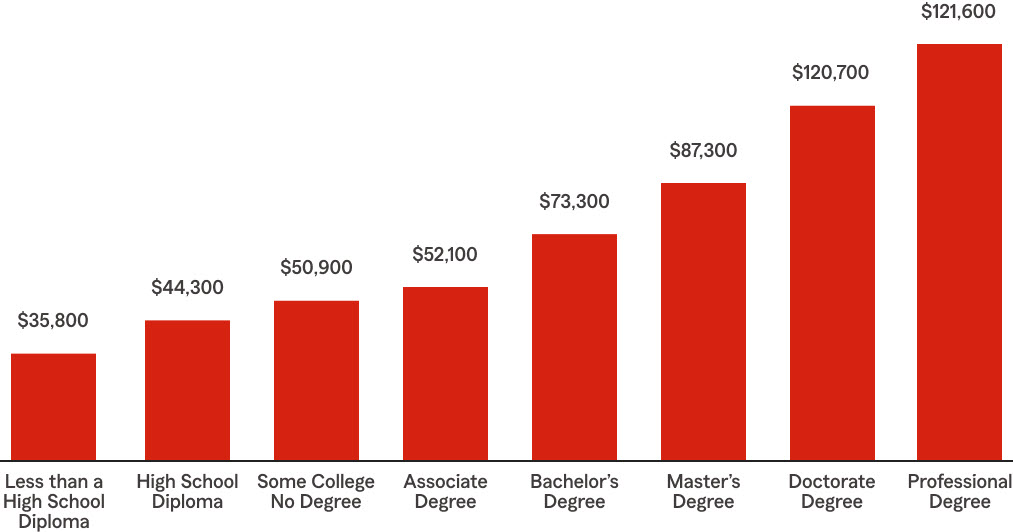
Education opens doors to opportunity
You don’t have to pay the high cost of higher education on your own
It’s often helpful to encourage friends and family to contribute to education savings. Grandparents, aunts and uncles, and friends may all welcome the opportunity to help your student. After all, education is the gift that lasts a lifetime. Long after toys break or clothes are outgrown, a deposit into an education savings plan will still be appreciated.
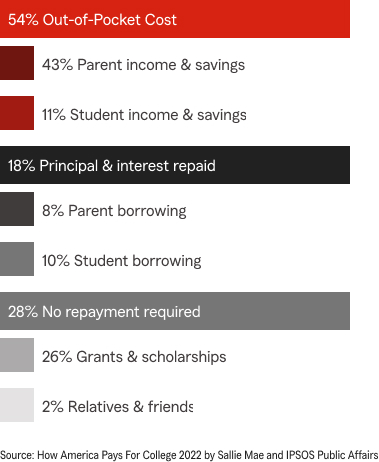
Today, parents often combine their own money with loans, gifts, grants and scholarships

1 thecollegeinvestor.com, "Average Student Loan Debt By Year (Graduating Class)" Robert Farrington. June 23, 2023.
2 Trends in Higher Education Series. Education Pays 2023. The Benefits of Higher Education for Individuals and Society. Jennifer Ma. Matea Pender and Meredith Welch: College Board.
Customers who currently have a Coverdell Education Savings Account (ESA) should contact their State Farm agent with any questions.
Risk Disclosures
The State Farm 529 Savings Plan (the "Plan") is sponsored by the State of Nebraska, administered by the Nebraska State Treasurer, as Trustee, and the Nebraska Investment Council provides investment oversight. Union Bank & Trust Company will serve as program manager and Northern Trust Securities, Inc. will serve as distributor. The Plan offers a series of Investment Options within the Nebraska Educational Savings Plan Trust (the "Trust") which offers other Investment Options not affiliated with the Plan. The Plan is intended to operate as a qualified tuition program to be used only to save for qualified education expenses, pursuant to Section 529 of the U.S. Internal Revenue Code.
An investor should consider the Plan's investment objectives, risks, charges and expenses before investing. The Program Disclosure Statement at statefarm.com® which contains more information, should be read carefully before investing.
Investors should consider before investing whether their or their beneficiary's home state offers any state tax or other state benefits such as financial aid, scholarship funds, and protection from creditors that are only available for investments in such state's qualified tuition program and should consult their tax advisor, attorney and/or other advisor regarding their specific legal, investment or tax situation.
Not FDIC Insured* | No Bank Guarantee | May Lose Value
(*Except the Bank Savings Investment Option)
Neither State Farm® nor its agents provide tax or legal advice.
Participation in the Plan does not guarantee that contributions and the investment return on contributions, if any, will be adequate to cover future tuition and other higher education expenses, or that a beneficiary will be admitted to or permitted to continue to attend an eligible educational institution.
This material is provided for general and educational purposes only and is not intended to provide legal, tax or investment advice, or for use to avoid penalties that may be imposed under U.S. federal tax laws. This material is not an offer to sell or a solicitation of an offer to buy any securities. Any offer to sell units within the Plan may only be made by the Program Disclosure Statement and Participation Agreement relating to the Plan.
Nebraska Educational Savings Plan Trust Issuer
Nebraska State Treasurer Trustee
Nebraska Investment Council Investment Oversight
Union Bank and Trust Program Manager
State Farm VP Management Corp. Selling Dealer
Northern Trust Securities Distributor, Member FINRA, SIPC

Account owners do not own shares of the underlying investments, or, in the case of the Bank Savings Investment Option, directly hold a savings account, but rather own an interest in the Individual Investment Options offered by the State Farm 529 Savings Plan.
If assets are not used for qualified expenses, the earnings portion of the withdrawal is subject to federal income tax and an additional 10% federal tax and may be subject to state and local taxes. Qualified higher education expenses include tuition, fees, textbooks, supplies and equipment (including computers) required for enrollment or attendance and certain room and board expenses for the academic term during which the student is enrolled at least half time at an eligible educational institution. Expenses for special-needs students that are necessary in connection with their enrollment or attendance may also be eligible.
If the account owner dies before the end of the five-year period, a prorated portion of the contribution will be included in his or her taxable estate. If you contribute less than the $95,000 maximum, additional contributions can be made without incurring federal gift taxes, up to a prorated level of $19,000 per year. Federal gift taxation may result if a contribution exceeds the available annual gift tax exclusion amount remaining for a beneficiary in the year of the contribution.
No additional contributions can be made for any beneficiary when the fair market value of all accounts maintained for that beneficiary within all plans offered by the State of Nebraska reaches $500,000. Assets can grow beyond $500,000.
A “member of the family” includes an individual who is a son, daughter, stepson, stepdaughter or a descendant of any such person; a brother, sister, stepbrother, or stepsister; the father or mother, or an ancestor of either; a stepfather or stepmother; a son or daughter of a brother or sister; a brother or sister of the mother; a son-in-law, daughter-in-law, father-in-law, mother-in-law, brother-in-law, or sister-in-law; the spouse of the beneficiary or the spouse of any individual described above; or a first cousin of the beneficiary. For purposes of determining who is a “member of the family,” a legally adopted child or a foster child of an individual is treated as the child of that individual by blood. The terms “brother” and “sister” include half-brothers and half-sisters.
An eligible educational institution includes accredited post-secondary educational institutions or vocational schools in the United States and some abroad offering credit toward a bachelor’s degree, an associate’s degree, a graduate level or professional degree, or another recognized post-secondary credential. See www.fafsa.ed.gov/.
Non-Us residents disclosure:
Each of the investment products and services referred to on the State Farm Mutual Funds web site is intended to be made available to customers or prospective customers residing in the United States. The customer's U.S. permanent residence address must be a street address. This web site shall not be considered a solicitation or offering for any investment product or service to any person in any jurisdiction where such solicitation or offer would be unlawful.
Business Continuity Plan Disclosure for State Farm VP Management Corp.
State Farm VP Management Corp. has developed a Business Continuity Plan on how we will respond to events that significantly disrupt our business. Since the timing and impact of disasters and disruptions is unpredictable, we will have to be flexible in responding to actual events as they occur. With that in mind, we are providing you with this information on our business continuity plan.
Contacting Us – After a significant business disruption, if you cannot contact us as you usually do at 1-800-321-7520, you should contact your registered State Farm agent or go to our web site at statefarm.com®.
Our Business Continuity Plan – We plan to quickly recover and resume business operations as soon as possible after a significant business disruption and respond by safeguarding our employees and property, making a financial and operational assessment, protecting the firm’s books and records, and allowing our customers to transact business. In short, our business continuity plan is designed to permit our firm to resume operations as quickly as possible, given the scope and severity of the significant business disruption.
Our business continuity plan addresses: data back-up and recovery; all mission critical systems; financial and operational assessments; alternative communications with customers, employees, and regulators; alternate physical location of employees; critical supplier, contractor, bank and counter-party impact; regulatory reporting; and procedures to help ensure that our customers have prompt access to their funds and securities if we are unable to continue our business.
Our business continuity plan may be revised or amended. If changes are made, an updated summary will be promptly posted on our website (statefarm.com) or you may obtain an updated summary by calling us at the number below and requesting that a written copy be mailed to you.
Varying Disruptions – Significant business disruptions can vary in their scope, such as only our firm, a single building housing our firm, the business district where our firm is located, the city where we are located, or the whole region. Within each of these areas, the severity of the disruption can also vary from minimal to severe. In a disruption to only our firm or a building housing our firm, we may transfer our operations to a local site when needed and expect to recover and resume business within 1 business day. In a disruption affecting our business district, city, or region, we will transfer our operations to a site outside of the affected area, and expect to recover and resume business within 3 business days. In either situation, we plan to continue in business, transfer operations if necessary, and notify you through our web site statefarm.com, or our customer number how to contact us. In the unlikely event that the significant business disruption is so severe that it prevents us from remaining in business, our plan provides procedures to help ensure that our customers have prompt access to their funds and securities.
In all of the situations described above, in light of the various types of disruptions that could take place and that every emergency poses unique problems, it may take longer to resume operations during any particular disruption. If you have questions about our business continuity planning, you can contact us at 1-800-321-7520.
Important Information about Procedures for Opening a New Account
To help the government fight the funding of terrorism and money laundering activities, Federal law requires all financial institutions to obtain, verify, and record information that identifies each person who opens an Account.
What this means for you: When you open an account, we will ask for your name, address, date of birth and other information that will allow us to identify you. We may also ask to see your driver’s license or other identifying documents.
AP2025/05/0882