Can a power surge damage my electronics?
An invisible culprit may be harming your devices. Learn how to help protect your property.
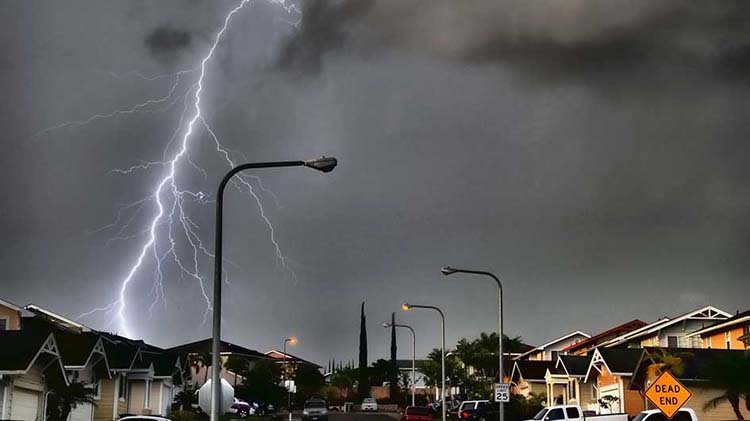
Maybe you know this story: There's a thunderstorm. Lightning strikes nearby. The power cuts out for a moment, then returns. But when you try to switch on the TV, it doesn't seem to work.
Electrical surges can instantly overload and short out the circuitry of home electronics and anything else plugged into the wall, or they can degrade them over time. Learning more about surges can help you save money and protect your property.
How does a power surge cause damage?
In the United States, many homes use electrical power in the form of 120-volt, 60 hertz, single phase, alternating current.
However, the voltage is not delivered at a constant 120 volts. With alternating current, the voltage rises and falls in a predetermined rhythm. The voltage oscillates from 0 to a peak voltage of 169 volts. Many appliances and electronics used in the United States are designed to be powered by this form of generated electricity. But during a power surge, the voltage exceeds the peak voltage of 169 volts.
A spike in voltage can be harmful to appliances and electrical devices in your home. Increasing voltage above an appliance's normal operating voltage can cause an arc of electrical current within the appliance, and the heat generated in the arc can cause damage to the electronic circuit boards and other electrical components.
Smaller, repeated power surges could be the reason your TV or gaming system mysteriously stops working. These smaller surges can slowly cause damage, so your computer or stereo may continue to function until the integrity of the electronic components finally erode. This shortens the life span of appliances and electronics.
Signs of a power surge
Learning the common signs of a power surge can help you recognize when your home is potentially affected by surges. Signs include:
- Your circuit breakers are tripped.
- Dimmed or flickering lights.
- Digital clocks on electronics, like a stove or microwave, are blinking and/or show the wrong time.
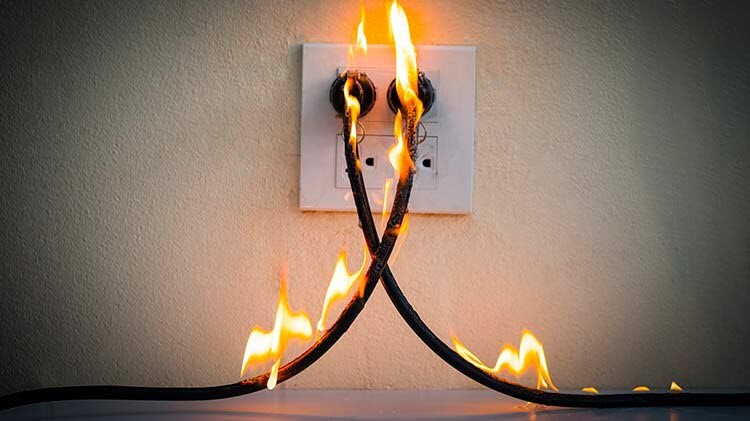
- There is a burning smell or scorch marks on outlets.
- There is a humming sound coming from your outlets.
What causes a power surge?
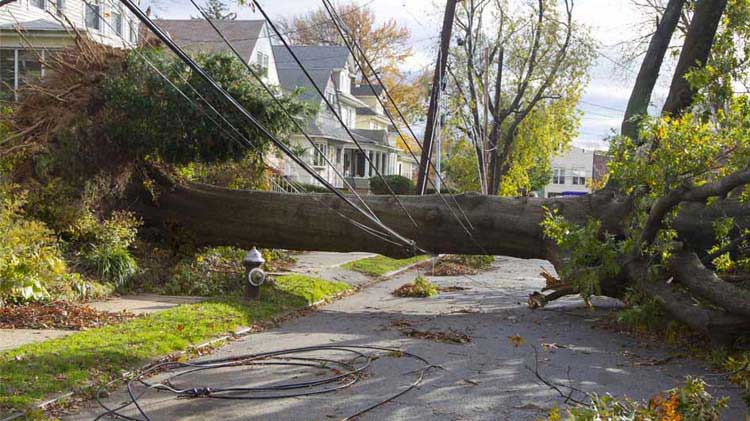
Power surges can originate from the electric utility company during power grid switching. Another common cause of power surges, especially the most powerful ones, is lightning. They can also originate inside a home when large appliances like air conditioners and refrigerator motors turn on and off.
Power surges can enter a home through several pathways. Lightning can take the path of the cable TV, satellite dish, power cords, or through the incoming electrical service line.
How to help prevent power surges
- Install special electrical outlets that offer surge protection. Surge protection outlets are useful in locations where there isn't room for a plug-in surge protector, such as near a countertop microwave oven.
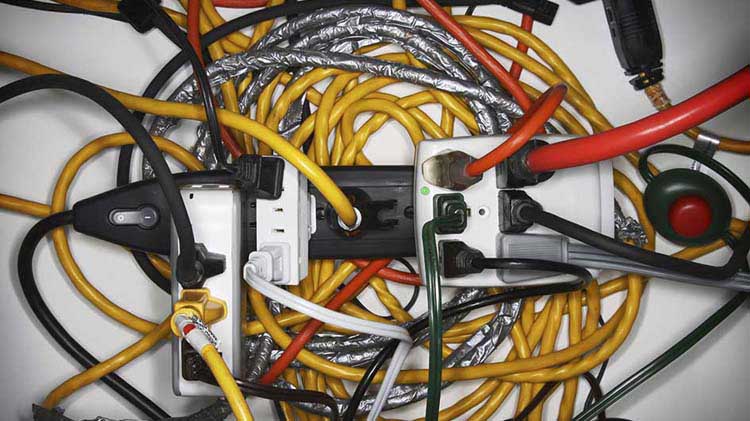
- Use point-of-use surge protection devices (SPDs) or surge protecting power strips. This should help protect your electronic and electrical appliances from most electrical surges. An SPD does not suppress or arrest a surge; it diverts the surge to the ground. Some point-of-use surge suppressor may look like a regular plug strip or extension cord, however, unless it specifically says so, don't assume your plug strip offers surge protection. Also, when selecting an SPD, look for one that has some means of letting you know if it has failed, such as an indicator light or audible alarm, and is no longer protecting the connected equipment.
- Consider a whole-house surge suppressor or panel-mounted surge suppressor. A whole-house surge suppressor connects directly to your fuse box and aids in helping prevent surges from the source. These are sometimes referred to as service entrance surge protection devices also.
Utilize a two-tiered approach
It may be helpful to use more than one type of surge protection.
- Point-of-use surge protection devices can help protect specific appliances in your home from power surges. These devices are designed to plug directly into outlets and could shield electronics like computers, televisions, and kitchen appliances from sudden voltage spikes. By focusing on individual pieces of equipment, point-of-use devices may give you extra confidence that your most important items are safe when electrical issues occur.
- Using a service entrance surge protection device helps provide protection for your entire electrical system; they help protect things such as motors, lights, outlets, light switches and other hardwired items in the house that do not plug into an electrical outlet and can't be connected to a point-of-use surge protection device. If the power surge is created by a lightning strike or power fluctuation on the utility lines, the service entrance surge protection device can help reduce the power surge to a lower level before it gets to the point-of-use surge protection device.
Surge protectors should be viewed as having a limited lifespan and in areas of the country with high surge activity, protectors may need to be replaced periodically.
The information in this article was obtained from various sources not associated with State Farm® (including State Farm Mutual Automobile Insurance Company and its subsidiaries and affiliates). While we believe it to be reliable and accurate, we do not warrant the accuracy or reliability of the information. State Farm is not responsible for, and does not endorse or approve, either implicitly or explicitly, the content of any third-party sites that might be hyperlinked from this page. The information is not intended to replace manuals, instructions or information provided by a manufacturer or the advice of a qualified professional, or to affect coverage under any applicable insurance policy. These suggestions are not a complete list of every loss control measure. State Farm makes no guarantees of results from use of this information.