Does homeowners insurance cover asbestos removal?
Usually, asbestos removal or remediation isn’t covered by homeowners insurance when a claim is based solely on the presence of asbestos in a home. Asbestos is generally considered a contaminant, and homeowners policies typically exclude costs to remove or remediate contaminants.
Finding asbestos in a home does not create a covered loss by itself. A different situation may arise when asbestos-containing material is affected by a covered loss and asbestos-related work is necessary to complete covered repairs. Any coverage determination is claim specific and depends on the cause of the damage, the work that is needed and the terms, conditions and exclusions of the policy.
What is asbestos and where might it be found in a home?
Asbestos is a naturally occurring mineral fiber that was historically used in many building materials because of its durability and resistance to heat.
In homes, asbestos may be found in materials such as insulation, floor and ceiling tiles, roofing materials, siding and pipe wrap. Older homes may be more likely to contain asbestos-containing materials, although they can also be found in newer buildings. The United States Environmental Protection Agency (EPA) provides additional information about where asbestos may be present.
A home’s age or the appearance of a building material does not confirm whether asbestos is present. Laboratory testing is needed to determine whether a suspect material contains asbestos.
Asbestos can pose health risks when fibers are released into the air and inhaled. Materials in good condition that are left undisturbed generally present less concern than materials that are damaged, deteriorating or disturbed.
When might homeowners insurance help with asbestos removal?
Finding asbestos in a home doesn’t create a covered loss by itself. For example, asbestos discovered during a planned renovation or removed as a preventive measure would generally fall outside homeowners insurance coverage.
It may be different when a covered loss damages building materials that contain asbestos. In those cases, some asbestos-related work may be considered as part of the covered repairs. This doesn’t mean testing, removal or remediation is required for every claim involving asbestos. What work is needed and whether coverage applies depends on the specific circumstances.
If property damage is involved, consider contacting your insurance company before authorizing non-emergency asbestos work. They can help explain what may be needed for the claim and which policy provisions, limits, deductibles or exclusions may apply. Here are some scenarios to consider:
*These are general scenarios and not coverage determinations. Coverage depends on the facts of the loss and the terms, conditions, limits and exclusions of the applicable policy.
Does asbestos need to be removed?
Not necessarily. Asbestos-containing material that is in good condition and isn’t likely to be disturbed may not need to be removed. Depending on the type, location and condition of the material, a trained asbestos professional may recommend leaving it in place, repairing it, sealing or covering it or removing it.
This is also why the presence of asbestos doesn’t automatically mean testing or remediation is needed as part of an insurance claim. The appropriate response depends on the condition of the material, the repairs being performed and the circumstances surrounding the property damage. Avoid cutting, sanding, drilling or scraping materials you suspect may contain asbestos until they have been evaluated.
What to do if you find asbestos before or during a renovation
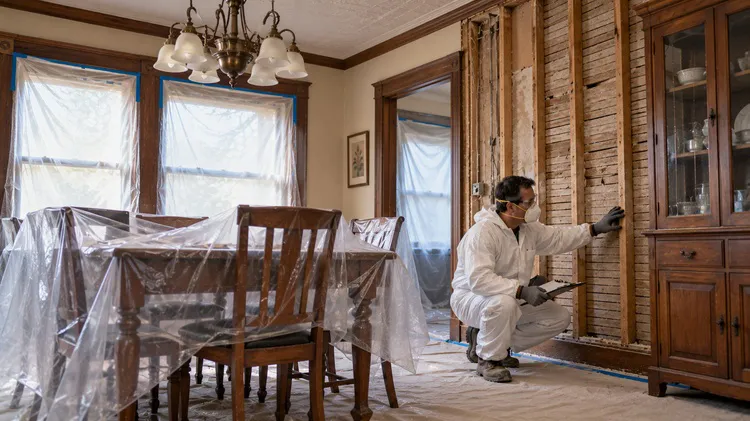
Renovations can expose older materials that have been hidden behind walls, flooring or ceilings. If you find material you think may contain asbestos, avoid disturbing it until you know more.
Consider these steps:
- Stop work in the area if continuing could disturb the material or create dust.
- Keep people away from damaged or exposed material.
- Consider having suspect material evaluated by a trained and accredited asbestos professional.
- Check state or local requirements that may apply to asbestos testing, handling or removal.
- If the material is encountered while repairing damage associated with an insurance claim, contact your claim representative before authorizing non-emergency asbestos work.
If you’re planning a project in an older home, considering potential asbestos-containing materials before demolition begins may help you better understand the scope of the renovation.
Questions to ask if asbestos is involved in a homeowners claim
If asbestos-containing material is present in an area affected by property damage, consider asking your claim representative:
- What part of the damage is being considered under the claim?
- Are there policy provisions or exclusions related to contaminants or asbestos that may apply?
- Does the asbestos-containing material affect the repairs that are needed?
- Is any asbestos-related work necessary to complete the covered repairs?
- What documentation or estimates are needed before work begins?
- Does the damage need to be inspected before non-emergency work starts?
Because the circumstances of each loss can be different, your claim representative can help explain how the applicable policy provisions relate to your specific claim.
Frequently asked questions about asbestos
Can you tell whether a material contains asbestos by looking at it?
Generally, no. Materials containing asbestos can look similar to materials that don’t contain it. A qualified laboratory can test a properly collected sample to determine whether asbestos is present.
Does an insurance claim involving asbestos always require testing or remediation?
No. The presence of asbestos doesn’t necessarily mean testing, removal or remediation is needed. What work is appropriate depends on the condition of the material, the property damage and the repairs that need to be completed. If asbestos-containing material is involved in an insurance claim, talk with your claim representative before arranging non-emergency asbestos work.
How much does asbestos removal cost?
Costs can vary depending on the type and amount of material, its location, accessibility and the work required to handle it safely. A qualified asbestos contractor can provide an estimate based on the conditions in the home. Keep in mind that the cost of asbestos removal doesn’t determine whether the work is covered by homeowners insurance.
What should you ask an asbestos professional before hiring them?
Ask about their training and accreditation, experience with the type of material in your home and how the work area may be contained and cleaned. You can also ask what state or local requirements apply and what documentation you’ll receive after the work is finished.
The presence of asbestos alone is not a homeowners insurance loss and does not mean the material must be tested or removed. For asbestos safety and regulatory guidance, consult EPA and the appropriate state or local agency. If asbestos-containing material is involved in separate property damage that is part of a homeowners claim, contact your claim representative before authorizing non-emergency asbestos-related work.
This content was developed with the help of AI and reviewed by State Farm editors.
The information in this article was obtained from various sources not associated with State Farm® (including State Farm Mutual Automobile Insurance Company and its subsidiaries and affiliates). While we believe it to be reliable and accurate, we do not warrant the accuracy or reliability of the information. State Farm is not responsible for, and does not endorse or approve, either implicitly or explicitly, the content of any third-party sites that might be hyperlinked from this page. The information is not intended to replace manuals, instructions or information provided by a manufacturer or the advice of a qualified professional, or to affect coverage under any applicable insurance policy. These suggestions are not a complete list of every loss control measure. State Farm makes no guarantees of results from use of this information.
State Farm Fire and Casualty Company
State Farm General Insurance Company
Bloomington, IL
State Farm Florida Insurance Company
Orlando, FL
State Farm Lloyds
Richardson, TX