Key reasons why you should never leave pets in hot cars
Provided by

Can you leave your dog in a hot car with the windows cracked or A/C running? Safety tips all pet owners should know before leaving dogs or cats in hot vehicles.
Like most pet parents, you care about your health and well-being in every season. While you probably know that following basic summer safety steps is crucial, it may be surprising to learn that over a hundred pets die each year from an entirely preventable situation — being left in a hot car.
Is it ever safe to leave pets in cars? For many pet owners, the everyday hustle and grind often means bringing animals along on errands and leaving them in the car as needed. Tragically, this can be a fatal mistake. During the hot months of summer, even what feels like a short period of time in a parked car can cost a pet their life. In fact, in 2024, 111 dogs and other companion animals reportedly died from heat-related causes, while 388 were rescued from the heat.
Part of being a responsible pet owner means understanding the risks. Here’s what you need to know about leaving dogs and cats in hot cars, including whether it’s possible to do so safely.
Why leaving pets in cars is so dangerous
Ever get in your car and become startled by how sweltering it is compared to the outside air? Thanks to glass windows, surfaces that absorb heat and an enclosed space, it doesn’t take long for parked vehicles to transform into ovens. This isn’t just a figure of speech — food has literally been cooked in hot cars. While that may seem amusing, it’s a somber reminder of why leaving dogs and cats in your car, for even a short time, can lead to devastating consequences.
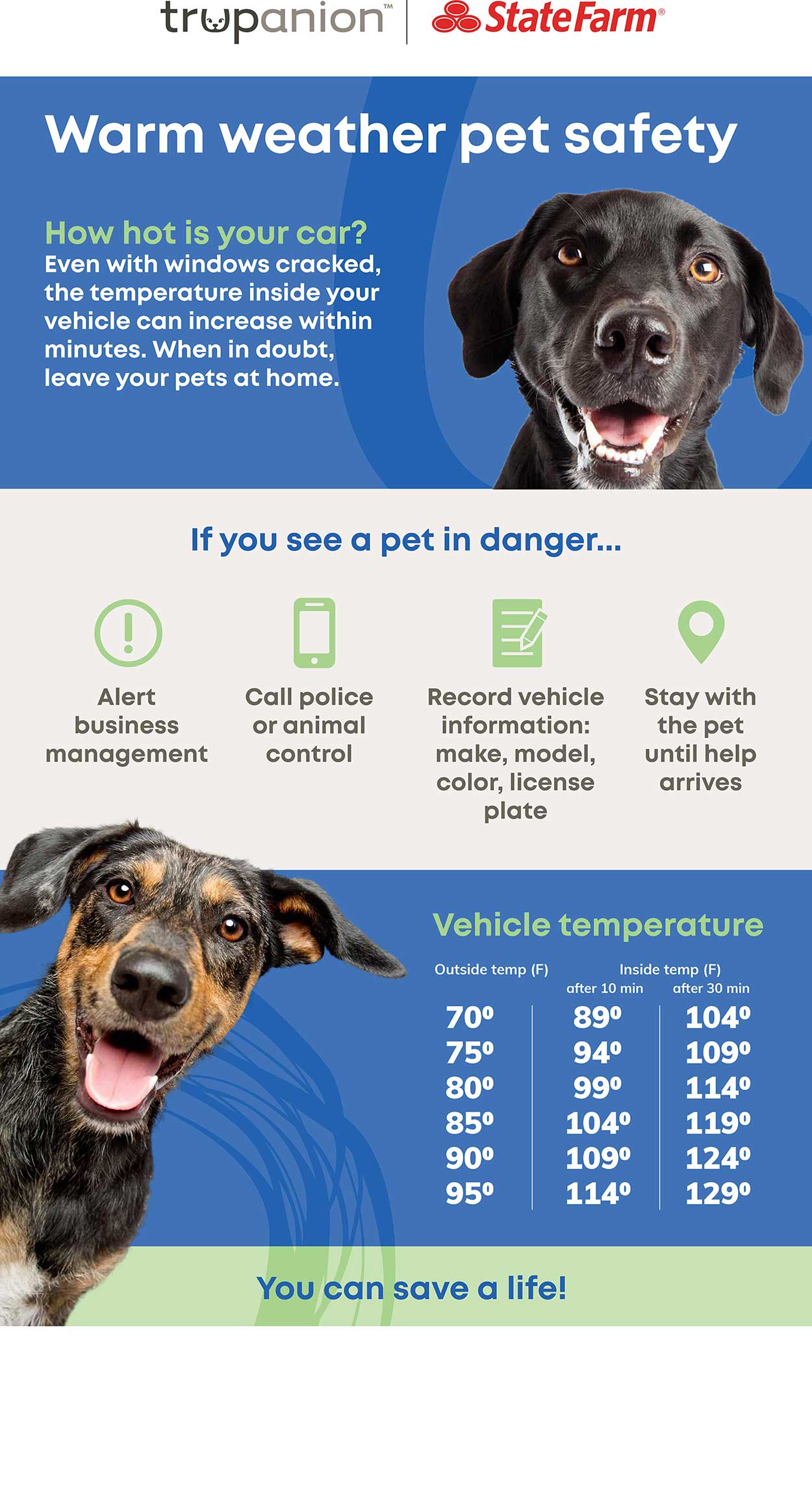

In fact, it doesn’t have to be that hot outside for your car to reach temperatures capable of causing heatstroke in pets. For example, an outdoor temperature of 75 degrees Fahrenheit can rise to 94 degrees Fahrenheit inside a car after being parked for just 10 minutes. Wait 30 minutes, and the car’s heat levels can reach well over 100 degrees Fahrenheit.
Leaving dogs in cars with the windows open: Safe or not?
Some pet parents may feel more at ease leaving animals in hot cars if the windows are cracked down. Nevertheless, the vehicle can still reach extreme temperatures in a short period of time. The perceived airflow from cracked windows may be insufficient to help prevent this.
Leaving the air conditioning running with pets inside the car isn’t a good idea either. The air conditioning system could fail, or the A/C could accidentally be turned off by the pet, leaving your pet at risk for heatstroke.
Cars with “dog mode” also shouldn’t be considered safe. While designed to regulate temperatures in parked cars for dogs, these systems have still been found to have flaws.
Can I leave my pet in a lighter-colored vehicle?
In more recent years, information has circulated through pet blogs and other sources that leaving pets in lighter-colored vehicles (particularly with light-toned interiors) is safer because the color doesn’t get hot as fast. However, this information is purely anecdotal. While it is true that lighter colors take longer to soak up the heat, it isn’t true that leaving your dog or other pet in a light-colored vehicle is safe.
In a comparison of temperatures in dark sedans vs light sedans, data from Consumer Reports shows that both types of vehicles still reach above 90 degrees Fahrenheit in under 30 minutes, and over 100 degrees Fahrenheit in less than an hour.
Is it illegal to leave your dog in the car?
Leaving a dog, cat or other pet locked inside a hot car isn’t just inhumane — in many places, it’s against the law. Currently, 32 states have laws that either prohibit leaving pets in parked cars under dangerous conditions (i.e., hot weather) or provide immunity for citizens who rescue pets under duress in vehicles.
What to do if you see a pet alone in a parked car
When you see a cat or dog locked inside a parked car during summer, it’s important to act quickly. Even if the pet appears to be okay for the time being, heatstroke can set in within minutes. Signs of heatstroke may include heavy panting and rapid breathing, excessive drooling, bright red gums and tongue, difficulty maintaining balance and hyperactivity. If you notice any of these signs, here’s what you can do:
- Look around — you may find the owner returning to the vehicle.
- Call local animal control or 9-1-1 immediately.
- Stay by the car and ask bystanders to check nearby stores or request an announcement.
- While it may be tempting to take immediate action, it’s best to wait for law enforcement or emergency personnel to arrive and handle the situation safely and legally.
Help keep pets safe from the heat all summer
High temperatures can affect pets throughout summer, both inside parked vehicles and out during other routine activities. Fortunately, there are multiple things you can do to help keep dogs and cats safe through the hot months and beyond:
- Follow these tips to help keep the whole family cool this summer.
- Help prevent dehydration in pets by always providing access to clean, fresh water. Bring pet water bottles or pop-up bowls on outings and take frequent breaks.
- Check forecasts before heading out and know when to call trips short or leave pets home.
- Never leave your dog or other pet in a parked car, even if the temperature outside doesn’t feel that hot.
- Help protect the health of dogs and cats further with pet insurance (and encourage friends and family to do the same).
While you’re at it, consider sharing this article on social media to alert others about the dangers of pets in hot cars. Heat-related pet accidents can happen when we least expect them — spreading awareness and making safe decisions can help save lives.
Pet insurance products are underwritten in the United States by American Pet Insurance Company and ZPIC Insurance Company, 6100-4th Ave. S, Seattle, WA 98108. Administered by Trupanion Managers USA, Inc. (CA license No. 0G22803, NPN 9588590). Terms and conditions apply, see full policy on Trupanion's website for details.
State Farm Mutual Automobile Insurance Company, its subsidiaries and affiliates, neither offer nor are financially responsible for pet insurance products. State Farm is a separate entity and is not affiliated with Trupanion or American Pet Insurance.
The information in this article was obtained from various sources not associated with State Farm® (including State Farm Mutual Automobile Insurance Company and its subsidiaries and affiliates). While we believe it to be reliable and accurate, we do not warrant the accuracy or reliability of the information. State Farm is not responsible for, and does not endorse or approve, either implicitly or explicitly, the content of any third-party sites that might be hyperlinked from this page. The information is not intended to replace manuals, instructions or information provided by a manufacturer or the advice of a qualified professional, or to affect coverage under any applicable insurance policy. These suggestions are not a complete list of every loss control measure. State Farm makes no guarantees of results from use of this information.
Neither State Farm nor its agents provide tax or legal advice.