Preparing your boat for a hurricane
Some advance planning can help protect your boat in a hurricane. Consider these tips to help prepare your boat.
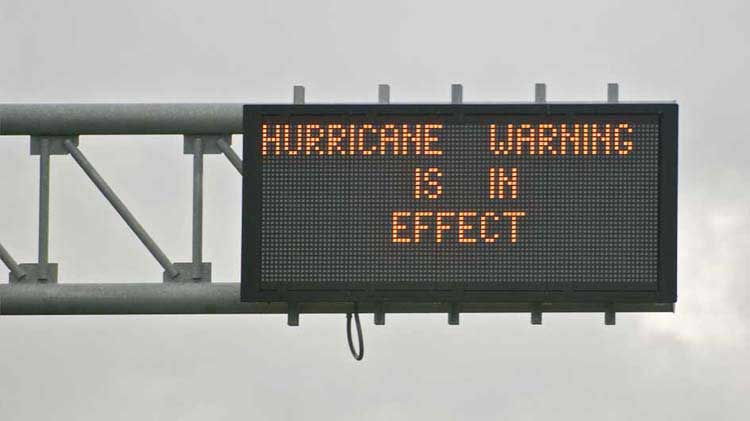
Hurricanes are tropical storms with high winds of 74+ miles per hour. They often lead to rising sea levels, increased tides and more than two or three inches of rainfall per hour. Some advance planning and preparation can help minimize loss by protecting your boat during a hurricane.
How long is hurricane season?
Hurricane season typically starts in either May (North Pacific) or June (Atlantic and Caribbean) and extends through the end of November. It’s important to have a hurricane evacuation plan in place before hurricane season.
What is the difference between a hurricane watch and a hurricane warning?
Knowing the difference between a watch and a warning can help provide a timeframe of how long it might be before a storm starts and how long you have to secure your boat.
- Watch — means that hurricane conditions are possible in the area in 48 hours.
- Warning — means hurricane conditions are expected in the area within 36 hours.
The National Hurricane Center can help keep you up to date on any hurricane or tropical storm-related weather events.
Have an agent contact me
with a quote
Tips to help prepare your boat before the hurricane
- Remove anything that isn’t permanently attached to the boat, such as paddles, dinghies, cushions, toys, dishes and electronics, and store these items in a safe place on dry land.
- See that boat parts such as tillers, wheels and booms, are tightly secured to the boat to help prevent movement.
- Secure all windows, doors and hatches.
- Charge the batteries to ensure the bilge pumps can run automatically during the storm. Consider turning off non-essential devices so energy will be available for the pumps.
- Consider adding anti-chafing protection to the areas of the boat that come in contact with rope.
- Keep all your important paperwork, such as boat insurance policies, identification cards, boating licenses and registrations, organized and stored in a safe place on dry land.
- Create an inventory list of all the boating equipment you own.
- Take pictures of everything in case the storm causes damage and you need to file a claim.
- If your boat is docked in a marina, talk to the operator to help prevent any confusion when the time comes to tie up or pull your boat from the water.
- If you are planning to take your boat to a hurricane hole to ride out the storm, charge your boat's radio before your vessel leaves port so you can get up-to-the-minute weather bulletins.
- Create a list of boating contacts such as marina information, your insurance agent and towing providers.
- Practice boat evacuation drills frequently to help prevent panic in case an unexpected hurricane hits.
- Above all, your well-being is important; play it safe and stay away from your boat during the storm.
Storing the boat on dry land during the storm
To help minimize damage to your boat during a hurricane, try to store it on dry land if possible. Consider these storage tips:
- Store it as far inland as possible.
- If you have the option, store your boat in a garage or storage unit.
- Use heavy duty lines to secure it to the trailer or the storage cradle.
- Place blocks around the wheels and deflate the tires to help prevent the trailer from rolling.
- Avoid leaving the boat on davits or a hydraulic lift.
Securing the boat in water
If you’re not able to store your boat on dry land, here are some precautions you might take to help minimize damage when leaving it in water:
- Position the boat's bow in the direction of the prevailing winds.
- Anchor the boat with at least two anchors that each have an anchor line length equivalent to 10 times the water depth at the mooring location.
- Ensure the bilge pump, including its auto-float switch, is operational.
- Add some additional fenders to help protect the sides of the boat from hitting the pier.
- Cover the vents in the engine room and plug the exhaust pipes in the stern to help prevent water from flooding the motor.
Checking the boat after the storm
Even if you take the proper precautions before a hurricane, your property may still be damaged. If safe to do so, check on your property after the storm has passed. Powerful storms can knock down electrical wires, create dangerous roads and spread hazardous debris. When local authorities say it is safe to get to your boat, keep an eye out for electrical wires which may still be "hot", leaking fuel, missing dock boards, sewage backups and other dangers.
For safety, consider wearing boots and gloves when you inspect your boat. The following items can come in handy too:
- Camera
- Duct tape
- Extra line
- Trash bags
- Cleaning gear
- Anti-corrosion spray
If your boat isn't sunk or beached, first try to take pictures from as many angles as possible. Next, try to remove any salt, mud and moisture. Then remove any debris that may be in the bilges and pumps. Duct tape can help temporarily secure broken rigging or railings as well as seal cracks and holes. You may also want to check the water level in the bilge for any underwater damage and check for damage to the galley and engine fuel systems.
If your boat is sunk, beached or needs salvage, contact your insurance agent for guidance on how to proceed. Salvaging a boat can be difficult and best left to the professionals.
Don’t forget to review your boat insurance policy annually
Ensure you have sufficient boat insurance for your needs — it can help protect you against many of the risks of owning and operating a boat. For more information, contact your local insurance agent.
The information in this article was obtained from various sources not associated with State Farm® (including State Farm Mutual Automobile Insurance Company and its subsidiaries and affiliates). While we believe it to be reliable and accurate, we do not warrant the accuracy or reliability of the information. State Farm is not responsible for, and does not endorse or approve, either implicitly or explicitly, the content of any third party sites that might be hyperlinked from this page. The information is not intended to replace manuals, instructions or information provided by a manufacturer or the advice of a qualified professional, or to affect coverage under any applicable insurance policy. These suggestions are not a complete list of every loss control measure. State Farm makes no guarantees of results from use of this information.
State Farm Fire and Casualty Company
State Farm General Insurance Company
Bloomington, IL
State Farm Florida Insurance Company
Orlando, FL