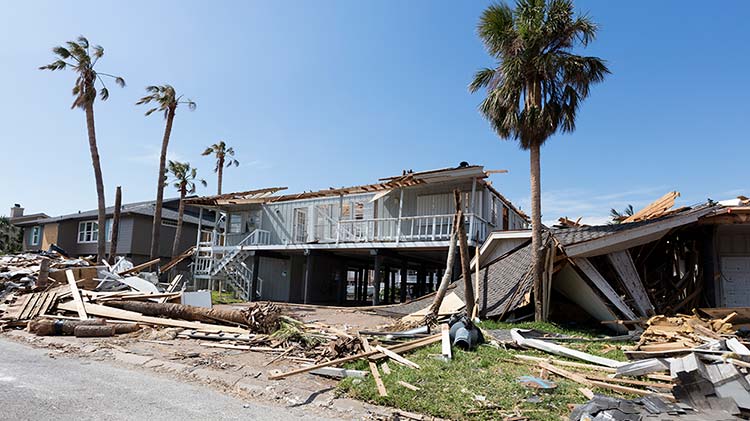
What to do after a hurricane
Helpful tips on what to do after a hurricane, including making an insurance claim, cleaning up your home and repairing damage to your property.
Even if you’ve taken the necessary precautions to prepare your home for a hurricane, it may still sustain damage. After local officials have given the all-clear to return, be mindful of road damage and hazards, such as floodwater, that may impede your return. Stay away from barricaded roads and disaster areas to avoid injury or damage to your vehicle. Here's what to consider when returning home after a hurricane:
Hurricane insurance coverage
Does home insurance cover hurricane damage?
Homeowners insurance typically provides some coverage for hurricane damage, but verify the specifics with your insurer to see that your house, condominium or rental property is adequately protected. Coverage often includes damage from wind and rain but may exclude flooding. If you live in a high-risk area, you may have a separate hurricane deductible. It may be helpful to speak with your agent about flood insurance, as it's usually not included in standard homeowners policies.
Get a homeowners insurance quote
Want to protect your home?
Does car insurance cover hurricane damage?
Your car might sustain damage from falling trees and flying debris during a hurricane. Comprehensive insurance typically covers wind and flood damage to your vehicle caused by a hurricane. It’s recommended to contact your insurance agent to confirm that you have adequate coverage before a loss occurs, especially if you reside in an area prone to hurricanes.
If you live in a hurricane-prone area, take note of the following precautions to protect your property and family from wind and water damage after a hurricane.
How to clean up after a hurricane
Before cleaning up any hurricane damage to your home or vehicle, contact your insurance agent. They can help guide you through the claims filing process and assist with submitting your claim. It’s important not to discard or repair damaged items before reporting the claim, as coverage decisions will be made by the claims department after investigation.
When you begin cleaning, it may be helpful to prioritize safety by using appropriate gear like safety glasses, hard hats, masks, heavy gloves and waterproof boots. Consider these tips after a hurricane:
- Check for hazards. Before cleaning, look for unusual odors, water near electrical appliances, structural damage or chemicals in the water. If you see these hazards, contact local authorities and utilities.
- Document everything. To assist with the insurance claim process, take photos and videos of the damage. Create a room-by-room inventory of missing or damaged items and include receipts if possible. Note the manufacturer, date and place of purchase and price.
- Dry out the building. Remove damaged drywall, carpets, pads, baseboards and cabinet kick plates. Keep carpet samples and ventilate the home. To help prevent further rain damage, use tarps to cover as much of your property as possible, but only if it’s safe to do so.
- Clean up. Be careful when cleaning. Track time and money spent. If using a contractor, get an estimate and talk to your claims representative before starting repairs. Get receipts for labor and materials.
- Store valuables safely. Secure jewelry and other valuables to prevent theft.
- Care for antiques and art. Handle antiques, art, sterling and brass with care. Let them dry without oiling or rubbing.
- Clean wood furniture. Clean wood furniture quickly and don’t rub in soil or plaster.
- Dry furniture, bedding, carpets and rugs if they have minor water damage. Discard saturated items and keep them away from other items.
- Dry metal objects. Apply a cleaning solution to prevent corrosion after drying these objects.
- Dry electronics. Don’t oil radios, televisions and other electronic devices. Instead, dry them and have them professionally serviced before use.
- Don’t throw out expensive items. Keep items like televisions and furniture until your claim representative authorizes disposal.
Additional safety measures
When returning to your home after a hurricane to clean up, prioritize your safety and be aware of the following:
- Don't use candles. If there are gas leaks, candles could ignite a fire and cause further damage. Use a battery-powered flashlight instead to avoid fire hazards.
- Avoid drinking tap water. The water supply might be contaminated due to the hurricane. Wait for official confirmation that the tap water is safe to drink.
- Refrain from turning on gas-powered appliances. Using gas-powered appliances like generators or grills could lead to carbon monoxide exposure. To keep your home safe, use a carbon monoxide detector.
- Stay away from other affected areas. While it's commendable to want to help your community, venturing into other affected areas could be dangerous. You may encounter hazards such as wildlife, downed power lines, floods and gas leaks, or unstable roads, bridges and sidewalks.
Start repairing storm damage to your property
After you have cleaned up your property, discussed repair work with your claim representative and are safely ready to begin repairs, be cautious of home restoration scams. Find a qualified contractor to complete any repairs.
- Use local and reputable contractors. If there's a problem with the work, it can be much easier to repair by a local firm than one from out of town.
- Check your contractor's references. Call your Chamber of Commerce or Better Business Bureau (BBB). Confirm that the contractors have the experience to handle your repairs.
- Agree on payment terms. Before you sign anything, agree on the work to be completed and payment terms with the contractor.
Additional hurricane recovery resources
Below are some resources that may help you with your recovery.
- Centers for Disease Control and Prevention
- Disastersafety.org (an Institute for Business and Home Safety products)
- Federal Alliance for Safe Homes
You can get a homeowners insurance quote now, or give us a few details and a State Farm® agent will reach out to you.
The information in this article was obtained from various sources not associated with State Farm® (including State Farm Mutual Automobile Insurance Company and its subsidiaries and affiliates). While we believe it to be reliable and accurate, we do not warrant the accuracy or reliability of the information. State Farm is not responsible for, and does not endorse or approve, either implicitly or explicitly, the content of any third-party sites that might be hyperlinked from this page. The information is not intended to replace manuals, instructions or information provided by a manufacturer or the advice of a qualified professional, or to affect coverage under any applicable insurance policy. These suggestions are not a complete list of every loss control measure. State Farm makes no guarantees of results from use of this information.
State Farm Mutual Automobile Insurance Company
State Farm Fire and Casualty Company
State Farm General Insurance Company
State Farm Indemnity Company
Bloomington, IL
State Farm Florida Insurance Company
Orlando, FL
State Farm County Mutual Insurance Company of Texas
State Farm Lloyds
Richardson, TX