What to know before adopting a dog or cat
Provided by

Few things beat bringing home a new pet, but are you doing so responsibly? Here’s what to know before adopting a dog or cat.
Pets are great, aren’t they? They’re also a lot of work, and they often come with surprises — even for those who’ve had dogs and cats in the past.
Matching the pet's breed to your lifestyle, budgeting for your pet and being a responsible pet owner are just a few factors to consider before adopting a pet. Here are some things to keep in mind as you bring a new furry friend into your life.
Pets are a big commitment
The first thing you need to know is that any pet — from puppies and kittens to older dogs and cats in their golden years — is going to be a big responsibility. As a result, the new addition to your family is likely to affect many aspects of life for everyone in your household. There are some steps you can take ahead of time to help ease the transition for humans and pets alike:
- Get all members of your household on board and ready to care for a pet.
- Talk to other pet owners for advice.
- Stock up on new pet supplies before bringing your pet home, including a size-appropriate collar and leash.
- Look up local veterinarians and ask if there is a waitlist for new patients.
- Don’t schedule any big trips or other commitments for the first few months after you adopt your pet.
You’ll need to create a pet budget
One of the most important aspects of being a responsible pet owner and preparing for pet adoption is considering the cost of a new pet. Your new pet will need a yearly exam, wellness care, preventative care, vaccinations and basic pet care essentials. Other expected items may include food, toys and training.
Those are all costs you can expect to pay. But how can you budget and prepare for an injury or illness when it comes to your pets?
Your pet's medical care may cost hundreds or even thousands of dollars. At the end of the day, you want your new furry friend to be happy and healthy, without having to say "no" to medical care when they need it. Before adoption, consider your finances and whether you can afford the potential costs of the unexpected or ‘what-ifs.'
Not every pet will fit your lifestyle
One of the most important factors in responsible pet adoption is choosing a pet that matches your lifestyle. Consider how much time and energy you have to dedicate to a new furry family member. For example, do you work long hours, travel often or live in a smaller space? These are all factors that can affect your pet's mental, physical and emotional well-being.
Additionally, every cat and dog breed is different and may have genetic characteristics or temperaments that suit certain lifestyles better. While personality is always a factor, you can be proactive by selecting a breed that’s more your speed. Do your research and pick a pet breed that complements your daily schedule, activity levels and general family needs.
Choose your pet adoption source responsibly
In addition to breeders, there are a variety of animal welfare organizations helping pets every day. Whether you're looking for a local organization, a breed-specific shelter or a national pet rescue organization, most are passionate about finding loving homes for dogs and cats.
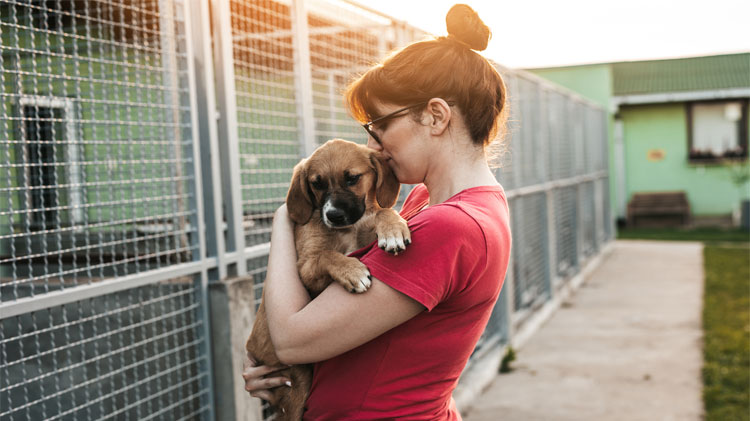
Consider researching which animal shelter or rescue group you would like to adopt your new pet from and ask questions. Most animal shelter organizations are run by volunteers who have spent a lot of time getting to know each one of these furry friends. They may have additional information about behaviors and quirks that might not be listed on a piece of paper.
Research is also important if you’re choosing a breeder. Look at how long they’ve been breeding pets and whether it’s a side hobby or a full-time professional pursuit. Ask whether they are registered as professional breeders with any kennel clubs or other established pet organizations. Request references and breeding pedigree information. The truth is that, while there are a lot of responsible and ethical breeders, there are also quite a few who breed pets irresponsibly. Adopting only from reputable, responsible breeders and animal welfare organizations can help discourage these practices.
Behavioral issues lead to failed pet adoptions
Sadly, not every pet adoption is successful. This is important to know before adopting a dog or cat so you understand what a serious decision this is. There are many reasons people choose to give up their pets — especially in the early stages — but data from Human Animal Support Services shows that pet behavior is a leading cause of adoption returns.
In addition to researching dog and cat breeds carefully and considering your lifestyle, pet training can help prevent behavioral issues. Successful training requires a lot of dedication, consistency and patience early on, but it can help strengthen the pet-human bond and set a foundation for a lifetime of positive experiences.
Responsible pet adoption includes protecting pet health
Adopting a new pet is exciting, but your experience with them won’t be all fun adventures. Every dog and cat is at risk of accidents and illnesses throughout their lifetime, and there’s no telling when or where these unpleasant surprises can strike.
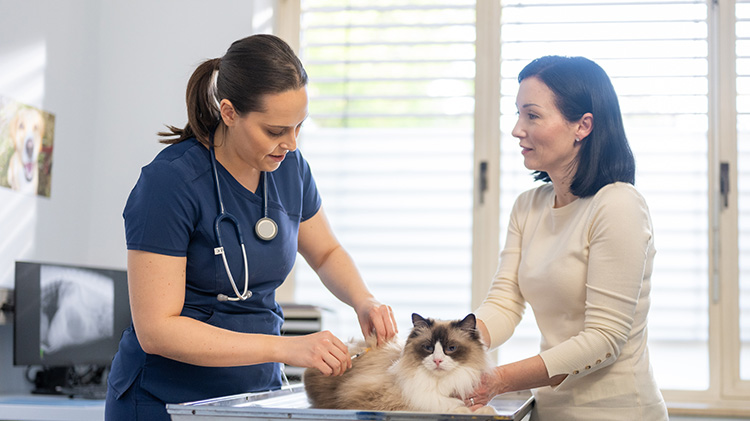
Be prepared to stick to a routine veterinary care schedule, ensuring your pet gets regular checkups and vaccines as needed. You’ll also want to practice monthly flea and tick control, as well as keep a pet emergency kit on hand for mishaps.
Small surprises can still come with veterinary costs that exceed your regular pet budget. Whether you're looking to bring home a new puppy, kitten or an adult dog or cat, a good pet health insurance policy can help.
Learn more about how a pet insurance policy can be there throughout your pet's lifetime.
Pet insurance products are underwritten in the United States by American Pet Insurance Company and ZPIC Insurance Company, 6100-4th Ave. S, Seattle, WA 98108. Administered by Trupanion Managers USA, Inc. (CA license No. 0G22803, NPN 9588590). Terms and conditions apply, see full policy on Trupanion's website for details.
State Farm Mutual Automobile Insurance Company, its subsidiaries and affiliates, neither offer nor are financially responsible for pet insurance products. State Farm is a separate entity and is not affiliated with Trupanion or American Pet Insurance.
The information in this article was obtained from various sources not associated with State Farm® (including State Farm Mutual Automobile Insurance Company and its subsidiaries and affiliates). While we believe it to be reliable and accurate, we do not warrant the accuracy or reliability of the information. State Farm is not responsible for, and does not endorse or approve, either implicitly or explicitly, the content of any third-party sites that might be hyperlinked from this page. The information is not intended to replace manuals, instructions or information provided by a manufacturer or the advice of a qualified professional, or to affect coverage under any applicable insurance policy. These suggestions are not a complete list of every loss control measure. State Farm makes no guarantees of results from use of this information.