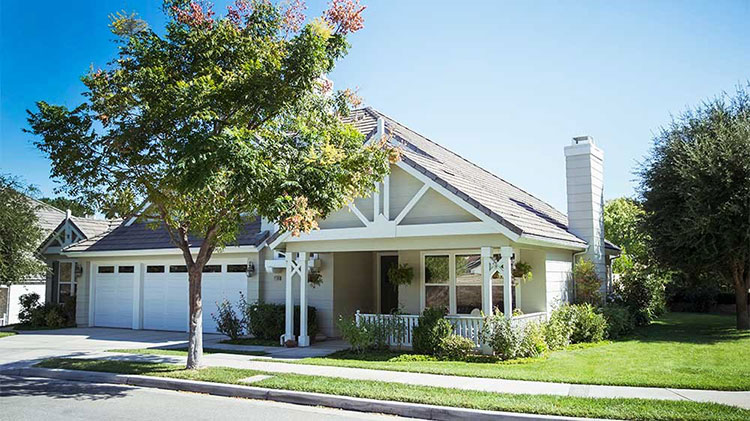
Does a new roof lower homeowners insurance?
A new roof may lower your homeowners insurance premium if roof age is used in pricing or if the roofing product qualifies for a discount or savings. However, other pricing factors and changes to the home’s estimated rebuilding cost may cause the total premium to stay the same or increase. Ask your insurer or agent what factors may apply before choosing materials or starting work.
Replacing an older roof may affect your premium differently than replacing a roof that is already relatively new. The roof’s installation date, roofing product and installation method may all be relevant to your homeowners insurance.
If wind, hail or another event damaged your roof and you plan to file a claim, contact your insurer to report the claim before authorizing permanent repairs.
Get a homeowners insurance quote
Want to protect your home?
When can a new roof lower homeowners insurance?
Where state law allows roof age to be used in pricing, an insurer may consider the roof’s age when calculating the premium. Replacing an older roof and reporting the new installation date may lower your premium, depending on the insurer and other pricing factors.
The roofing material you select may also affect the premium. Some insurers offer separate savings or discounts for qualifying impact-resistant roofing products that meet specified testing or eligibility requirements.
Other pricing factors and changes to the home’s estimated rebuilding cost may cause the total premium to stay the same or increase.
New roof premium factors at a glance
Use this table to compare factors that may affect the total premium and questions to ask before work begins.
Age of the roof being replaced
Replacing an older roof may help lower your premium in states where roof age is used
Does the age of my roof impact my premium?
Roofing product
Certain qualifying impact-resistant products may be eligible for a separate discount in participating states for some insurers
Which exact products qualify for the discount, and what records are required?
Material and rebuilding cost
Higher-cost materials may increase the estimated cost to rebuild the home, which means you may need to consider increasing your dwelling coverage amount
Does this type of roofing material increase the estimated cost to rebuild my home?
Installation method
Some insurers or programs may treat an overlay differently from a full roof replacement
Does my project need to be a full tear-off and replacement to qualify for any premium savings?
Why might the total premium stay the same or increase?
Even when the age of the roof is used in pricing, a roof replacement does not guarantee the total homeowners insurance premium will decrease.
These hypothetical examples show why the result can differ by home:
- Older roof replaced with a similar material: A homeowner replaces an older asphalt-shingle roof with a new similar standard product. In a state where roof age affects pricing, reporting the new installation year may lower the age-related part of the premium. If other pricing factors remain steady, the total premium may decrease.
- Relatively new roof replaced after damage: After experiencing storm damage, a homeowner replaces a roof that was already relatively new. Because there is only a small difference in age, the replacement may result in little or no age-based price change. The claim itself is handled separately under the applicable policy terms.
- Higher-cost material: A homeowner replaces an older roof with a higher-cost roofing product. The new installation date may lower the age-related part of the premium, but the upgraded roofing material may increase the home’s estimated rebuilding cost, which could prompt them to increase their dwelling coverage amount. As a result, the total premium could decrease, stay about the same or increase.
Actual results vary by state, policy and other pricing factors.
Which roofing products may qualify for homeowners insurance savings?
Certain qualifying impact-resistant roofing products may be eligible for homeowners insurance savings or discount, depending on the insurer, state, product and installation requirements.
For eligible State Farm homeowners policies, only certain products qualify in participating states. A completed Roofing Installation Information and Certification Form is required when applying for the qualifying roofing-product reduction.
An impact-resistant label or class rating alone may not confirm eligibility. Check the exact manufacturer and product before materials are ordered.
Consider reviewing the form with the contractor before work begins. The installer or inspector completes the required information, and an authorized roofing company representative signs the form. Keep the applicable product label and one copy of the completed form, then provide the second copy to your insurer.
Ask whether a complete roof replacement is required and whether an overlay meets the applicable underwriting and premium-reduction requirements. Rules may vary by state, policy and program.
Review available homeowners insurance savings and learn more about impact-resistant roofing materials.
What can you ask before replacing your roof?
Contact your insurer or agent before the contractor orders materials or begins work. Confirm the exact roofing product and installation requirements, ask which records are needed and find out when any approved premium change could take effect. Also ask whether the selected material could change the home’s estimated rebuilding cost which may prompt you to increase your dwelling coverage.
For help comparing contractors, estimates, materials and warranties, review these questions to consider when replacing a roof.
Ask your insurer or agent how a covered roof loss may be paid
Roof-specific loss settlement provisions vary by insurer, state and policy. Depending on the state and policy, some State Farm homeowners policies may include a Roof Surfaces Payment Schedule as an optional or required endorsement.
For covered windstorm or hail damage to roof surfacing, the schedule may limit payment to a percentage of the repair or replacement cost based on the roof’s age and material. In some states, the schedule may be tied to a premium adjustment.
Ask your insurer or agent whether a Roof Surfaces Payment Schedule applies to your policy and how it may affect your premium and payment after a covered roof loss.
What can you report after replacing your roof?
After the project is complete, contact your insurer or agent and provide the requested records. Depending on the state, policy and roofing program, these may include:
- Project records: Keep the final paid invoice, completion date and contractor information.
- Product records: Keep the manufacturer, product name, product label and impact rating.
- Installation records: Keep applicable permits, final building inspection records and photos.
- Insurance form: Submit the completed Roofing Installation Information and Certification Form when applying for qualifying product-based savings.
Not every item is required for every replacement. Ask which documents to submit and how they should be provided.
After the roof information is updated, review your home insurance coverage with your insurer or agent to discuss whether the project has affected your dwelling coverage needs, premium or available savings.
Frequently asked questions about new roofs and homeowners insurance
How much can a new roof lower home insurance?
There is no single savings amount that applies to every homeowner. The effect may depend on the age of the roof being replaced, the state, policy, roofing product, installation method, dwelling coverage and other pricing factors. Ask your insurer or agent how the replacement may affect your premium before work begins.
Does roof age affect homeowners insurance?
It may if roof age is used in pricing in your state. Reporting a new installation year could lower the rate used to calculate your premium. However, the final premium may also be affected by the roofing material, dwelling coverage needs and other pricing factors.
Should I tell my insurance company about a new roof?
Consider contacting your insurer or agent before selecting materials and again after installation is complete. Before work begins, ask whether product, installation or documentation requirements may apply. After the project, provide any requested records so the company can update the roof information and determine whether the replacement affects the premium, dwelling coverage needs or available savings.
You can get a homeowners insurance quote now, or give us a few details and a State Farm® agent will reach out to you.
This content was developed with the help of AI and reviewed by State Farm editors.
The information in this article was obtained from various sources not associated with State Farm® (including State Farm Mutual Automobile Insurance Company and its subsidiaries and affiliates). While we believe it to be reliable and accurate, we do not warrant the accuracy or reliability of the information. State Farm is not responsible for, and does not endorse or approve, either implicitly or explicitly, the content of any third-party sites that might be hyperlinked from this page. The information is not intended to replace manuals, instructions or information provided by a manufacturer or the advice of a qualified professional, or to affect coverage under any applicable insurance policy. These suggestions are not a complete list of every loss control measure. State Farm makes no guarantees of results from use of this information.
Neither State Farm nor its agents provide tax or legal advice.
State Farm Fire and Casualty Company
State Farm General Insurance Company
Bloomington, IL
State Farm Florida Insurance Company
Orlando, FL
State Farm Lloyds
Richardson, TX