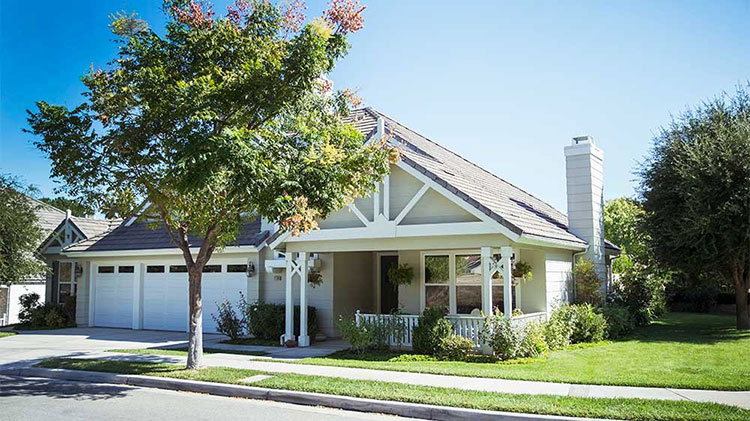
Things to consider when replacing a roof
If you need a roof replacement, learn about materials, warranty options and questions to ask your roofing contractor.
A roof replacement can be an intimidating and costly home repair or improvement. There are many things to consider when getting a new roof, such as which material is right for your home, what questions to ask a roofing contractor and what goes into a roofing agreement.
Roofing contractor quotes
A typical contractor quote may include:
- Materials — includes shingles, underlayment, flashing, additional framing and insulation.
- Size — figured per roofing square, which equals a 10-foot by 10-foot area.
- Pitch (also known as the slope) — anything above a 7:12 pitch (7 = height, 12 = length) may require additional installation equipment and may be more expensive.
Types of roofing materials
Evaluate roofing material options to help find the best match for your home's style. Asphalt, metal, wood or synthetic roofing materials tend to be adaptable to a variety of home styles. Impact-resistant roofing shingles and other roofing materials are designed to help resist hail, fire or flying debris damage and are usually available in a variety of styles. Shingles resembling wood or slate (made of plastic, cement, molded polymer, recycled resin or rubber) are generally available in multiple colors.
Here are some options to consider:
- Asphalt — has a lifespan of 20 to 25 years, is the least expensive per square to replace and works with a variety of home styles. It's the most used choice, easy to install, has lots of color options, is widely available and is in the middle of all types of roofs for insulation properties.
- Slate — generally has a lifespan of 50 to 100 years, but it tends to be more rare and costly. You may consider this material if your home leans toward a colonial, European or French style home or property. Colors are typically organic or neutral hues.
- Wood — typically lasts 25 to 30 years. Color selections are generally natural tones.
- Synthetic or composite — generally last up to 50 years. Color ranges may be more limited than asphalt, but there is still a range to choose from.
- Clay or concrete — generally has a lifespan of 40 to 50 years. This is typically a good choice for Mediterranean, mission, southwestern or Spanish-style homes or buildings. Clay or concrete roofs are mostly the color of the material or natural tones.
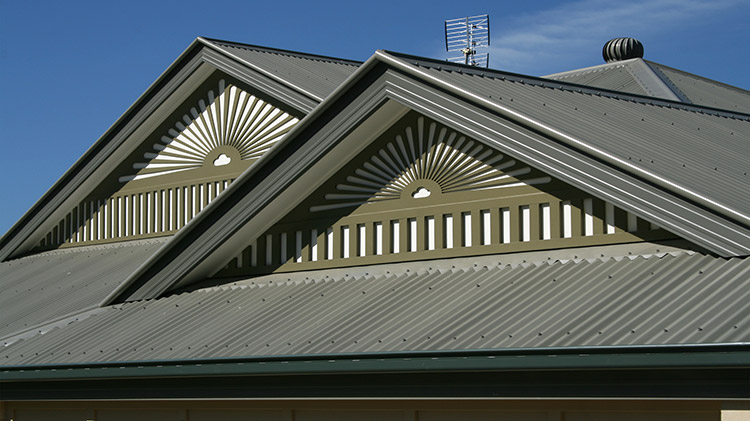
- Metal — typically last from 40 to 75 years and can be an attractive option because of the minimal maintenance. Material choices include steel (galvanized, galvalume or weathering), aluminum, copper, zinc and tin. Color selections usually include basic green, blue, red and neutral.
Average roofing material price and lifespan
Averages according to homeguide, as of August 2025.
*Does not include price of installation
**A roofing square equals 100 square feet
Depending on your household goals, you might consider using solar panels or solar shingles to help supplement some roofing materials. According to homeguide.com, the cost of solar materials ranges from about $1,000 to $2,500 per square. Solar panels or shingles have a lifespan of about 10-25 years depending on your weather conditions, panel type and maintenance capability. Utilizing sustainable energy in your home may help reduce your home’s carbon footprint.
Roof ratings
When you're shopping around for new shingles, remember to check how well they rate for fire, wind and impact resistance. Many roofing products are tested with standards created by Underwriters Laboratories (UL) and FM Global to evaluate how well they stand up to extreme conditions.
According to the Asphalt Roofing Manufacturers Association, the following are some ratings to look for:
- Wind — if your area is prone to high winds or hurricanes, you may want to consider shingles that are more likely to stay put during a storm. Shingles that have been evaluated according to ASTM D 7158 standard may be given a Class D (90 mph), G (120 mph) or H (150 mph) rating.
- Fire — fire-resistant shingles are classified by UL as Class A, B or C, with Class A being the highest.
- Impact — the UL 2218 and FM 4473 standard gives shingles an impact-resistance rating of Class 1 (the weakest) through Class 4 (the toughest). Some insurance companies may offer discounts for properties with impact-resistant shingles. Ask your insurance agent if your shingles qualify.
Questions to ask a roofer
Consider starting with questions that help you learn more about your potential roofing contractor's experience and approach to roofing projects. Some important questions to ask may include the following:
- What's your official company name and physical address? This information can help you verify the legitimacy of the contractor and helps provide a way to contact them.
- Do you have workers' compensation and liability insurance? Workers’ compensation helps protect you if a roofing company employee is injured while on the job; liability insurance offers coverage should damage occur to your property while work is being completed. Ask for a copy of the policy declarations page as proof of the coverage.
- Will you perform the work, or will you subcontract it? Using a subcontractor is not uncommon. If one is used, ask for a lien waiver, which can help protect you if the subcontractor is not paid.
- Do you have a current license in my state? Consider asking for a copy of the license or contact the licensing board directly to confirm status and check for any outstanding violations.
- Do you have references to share? References can help you verify quality of work and customer satisfaction.
- How long is the warranty? The bare minimum from a roofing contractor is typically a year. The materials will typically have a separate warranty.
- Who will be the on-site supervisor? Ask for the phone number of the on-site person in charge, in case you have any questions or concerns while they are performing the work.
- Are there any added costs involved? Does the material choice require additional special work, such as framing?
- Do the materials meet codes? Does the roof material meet local building codes, including fire regulations?
Roofing contract agreement
After you've selected a contractor, you should expect to receive a written roof replacement agreement. Agreements generally include the following:
- A detailed, written estimate — the estimate should clearly state the quantity of materials needed and labor charges, including both the description of work to be done and the price.
- Removal of the old roof — to check that the underlying structure doesn't have any issues.
- Cleanup and disposal services — documentation listing who is responsible for clean-up and waste disposal charges.
- Plywood sheeting — helps ensure proper structural integrity and goes under the shingles.
- Edging — where a roof meets the edge of a home, such as against a chimney. This can be a possible source of leakage, and metal or drip edging in these areas can help direct moisture toward the gutters.
- Gutter protection — this should indicate that any damage to the existing gutters during the roofing project will be repaired or replaced.
- Landscaping protection — will the contractor take responsibility for any accidental damage (such as ruts in the lawn caused by heavy equipment) during the project?
- Weather precautions — home protection measures during construction in case of weather conditions such as rain and wind.
- Work specifications — including the approximate start and completion dates and payment procedures.
- Warranty — the materials will generally have a separate warranty and should be outlined in the contract.
Based on roofing materials used, homeowners may be able to obtain a discount on their home insurance premiums. To learn more, contact a State Farm agent today.
The information in this article was obtained from various sources not associated with State Farm® (including State Farm Mutual Automobile Insurance Company and its subsidiaries and affiliates). While we believe it to be reliable and accurate, we do not warrant the accuracy or reliability of the information. State Farm is not responsible for, and does not endorse or approve, either implicitly or explicitly, the content of any third-party sites that might be hyperlinked from this page. The information is not intended to replace manuals, instructions or information provided by a manufacturer or the advice of a qualified professional, or to affect coverage under any applicable insurance policy. These suggestions are not a complete list of every loss control measure. State Farm makes no guarantees of results from use of this information.
State Farm Fire and Casualty Company
State Farm General Insurance Company
Bloomington, IL
State Farm Florida Insurance Company
Orlando, FL
State Farm Lloyds
Richardson, TX