Do golf carts need insurance?
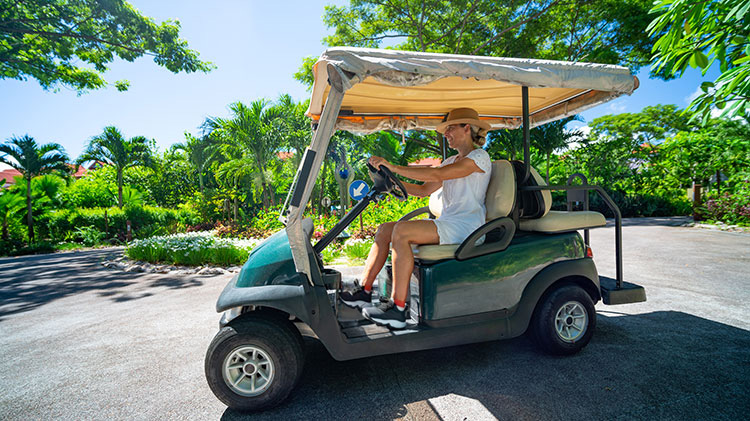
Golf cart insurance may be required, but it depends on where the cart is driven, if it’s on public or private property, the local rules that apply and how it’s classified. Homeowners and renters insurance may provide limited liability coverage in some situations, while some auto policies may offer coverage if the golf cart is specifically listed on the policy.
What is golf cart insurance and what does it cover?
Golf cart insurance helps cover injuries and property damage caused while driving a golf cart and may also help cover damage to the cart itself. It may be written as an off-road or recreational vehicle policy, depending on the cart and how it’s used, and you can often choose coverages similar to auto insurance, such as:
- Bodily injury and property damage liability: Includes injuries or property damage you cause while driving.
- Collision: Includes damage to the cart from a crash or rollover.
- Comprehensive: Includes theft, vandalism, fire or certain weather-related damage.
- Uninsured motorist: Includes injuries caused by an uninsured driver.
- Medical payments: Includes medical bills for you or passengers after an accident.
Some recreational vehicle policies combine collision and comprehensive into single coverage called Physical Damage Coverage and may appear slightly different for private passenger.
Is golf cart insurance required by law?
Whether golf cart insurance is required by law depends on where it’s driven and the local rules that apply:
- Private property: Golf cart insurance may not be required by law if the cart is driven on private property like your yard, but it might be required by a homeowners association.
- Public property: Liability insurance is usually required if the cart is driven on public roads and streets and it may need to be registered with the DMV depending on the state.
Does the type of golf cart affect what insurance may be required by law?
Yes. Insurance requirements can vary based on how your cart is classified under local and state law:
- Traditional golf carts: Typically designed for golf courses and short trips; if street use is allowed, requirements vary by location.
- Low-speed vehicles (LSV): Generally, a four-wheeled vehicle with a top speed over 20 mph but not more than 25 mph and may be subject to federal safety standards and additional state requirements for street use.
- Modified or faster carts: Speed upgrades can change how the cart is classified and what rules apply for public-road use.
Does homeowners or renters insurance cover golf carts?
While homeowners insurance or a renters policy may provide limited liability coverage for covered losses to help cover damages caused by a golf cart, it typically doesn’t cover damage to the golf cart itself:
- Golf cart accidents on your property: Homeowners or renters insurance may provide limited liability coverage for claims made against you involving bodily injury to someone or property damage to their belongings. Check with your provider to confirm what your policy entails as all coverages are subject to terms, provisions, exclusions and conditions.
- Golf cart accidents off your property: Coverage is often excluded. Please refer to your actual policy as all coverages are subject to terms, provisions, exclusions and conditions.
Does auto insurance cover golf carts?
Sometimes, but usually only if the golf cart is specifically listed on the insurance policy for the household’s autos or if a separate, standalone policy was bound to cover the golf cart’s specific exposure:
- If the cart is listed on the policy: Coverage may be available for injuries or property damage caused while driving.
- If the cart is not listed: The cart typically will not be covered.
When can a standalone golf cart insurance policy be helpful?
An insurance policy specifically designed for a golf cart can help if you want coverage for damages to the cart itself (for example, theft, weather damage, vandalism or crash damage) or when your cart use goes beyond what other policies may cover:
- Off-property use: Driving beyond your home or the golf course.
- Street use: Driving on or near public roads where requirements and coverage needs are often different.
- Clearer coverage: If homeowners/renters or auto coverage is limited or unclear for your situation.
While some areas may not require golf cart insurance, you may want to consider getting a standalone policy specifically designed for a golf cart if you'll be on public roads. Check with your insurance provider to confirm what your policy covers and whether additional coverage may be beneficial to you.
You may be able to increase your liability coverage limits by purchasing a separate umbrella insurance policy. Contact a local State Farm® agent to discuss your coverage options.
This content was developed with the help of AI and reviewed by State Farm editors.
The information in this article was obtained from various sources not associated with State Farm® (including State Farm Mutual Automobile Insurance Company and its subsidiaries and affiliates). While we believe it to be reliable and accurate, we do not warrant the accuracy or reliability of the information. State Farm is not responsible for, and does not endorse or approve, either implicitly or explicitly, the content of any third-party sites that might be hyperlinked from this page. The information is not intended to replace manuals, instructions or information provided by a manufacturer or the advice of a qualified professional, or to affect coverage under any applicable insurance policy. These suggestions are not a complete list of every loss control measure. State Farm makes no guarantees of results from use of this information.
Neither State Farm nor its agents provide tax or legal advice.
State Farm Mutual Automobile Insurance Company
State Farm Fire and Casualty Company
State Farm General Insurance Company
State Farm Indemnity Company
Bloomington, IL
State Farm County Mutual Insurance Company of Texas
State Farm Lloyds
Richardson, TX
State Farm Florida Insurance Company
Orlando, FL