Classic car storage: Common pitfalls and risks
Learn more about the everyday challenges associated with storing your classic car and ways to help protect your classic car.
Overview: Proper classic car storage is important to help preserve both the value and the memories associated with your vehicle. Understanding possible risks like rust, fluid degradation, pests, security threats and accidental damage can be helpful. By considering some key tips such as thorough cleaning, fluid checks, pest prevention and secure storage, you can help to ensure your classic car remains safe and well-maintained during the off-season.
Remember the first time you slid behind the wheel of your classic car? That flutter of excitement when the engine rumbled, or the way heads turned as you cruised down the street. Whether your pride and joy is a vintage vehicle, a rare collector car or a beloved antique truck, you know these cars are more than just vehicles, they’re memories on wheels.
But what happens when the driving season ends or life gets busy? The way you store your classic car can be the difference between keeping those memories alive and facing a garage full of regrets. Let’s walk through some classic car storage tips and real-world pitfalls to help you avoid costly repairs.
Why classic car storage matters
Maybe you’ve heard of someone whose vintage car was tucked away for winter, only to find rust, rodents or a dead battery waiting for them in spring. Storing your classic or antique car isn’t just about parking it, it’s about helping preserve your classic car, your passion and maybe even your family legacy. If you have a classic car, you may want to know how to store your vehicle properly.
Classic car storage: Common pitfalls
Let’s break down the risks of storing your vintage car so you can take steps to help avoid them when preparing your vehicle for long-term car storage:
A closer look at possible storage-related challenges
Here’s a breakdown of the issues you could encounter with storage of your classic car.
- Environmental — think garages are always safe? Not necessarily. Moisture can make its way in, which may lead to rust on the body, frame and even brakes. Temperature swings can be problematic, too. Vinyl seats and rubber seals can crack or warp if your collector car storage space isn’t climate-controlled. Sunlight, even through a small window, can fade paint and interiors quickly. If you’re worried about heat and UV, there are things you can do to help protect your antique car from the damaging effects of sun and heat. And then there’s the issue of dust. While wiping down your car with a dry rag may seem harmless, it can scratch the paint. Use a soft, clean cloth and consider a breathable car cover that lets moisture escape but keeps dust off the finish.
- Mechanical or chemical — when vintage cars sit, especially for longer periods of time, gasoline can go stale, engine oil can absorb moisture and brake fluid can attract water (which may lead to corrosion inside the brake lines). Tires may develop flat spots if they stay in one place for too long, and batteries can drain and corrode.
- Pests — garages, barns and storage units can be the types of spaces that attract rodents and insects. Mice and squirrels often build nests in warm engine bays and can chew through wires or seats. While restoration work may be enjoyable for many, doing so because vermin damaged the upholstery might not be the desired kind of project.
- Security — classic and collector cars may be tempting targets for vandalism or theft, so it’s important to see that your storage spot is secure. Even a locked garage isn’t foolproof. Consider extra locks, alarms or even a steering wheel lock for added security and avoid leaving spare keys or titles in the car. You may also want to consider comprehensive insurance, as this typically helps provide coverage on unexpected damage to a covered vehicle not caused by a crash.
- Accidental — ever stacked boxes near your classic car, only to have one fall and ding the fender? Or squeezed past with a lawnmower that left a scratch? It can happen. Consider creating a “no storage” zone around your vehicle and avoid having anything perched above it that could fall unexpectedly.
How to store a classic car: Quick tips
Following are some classic car storage tips to consider when tucking your vehicle away.
- Clean thoroughly (inside and out) before storing
- Top off and treat fuel, change the oil and check all fluids
- Inflate tires to recommended pressure and move the car occasionally if possible
- Disconnect or trickle charge the battery
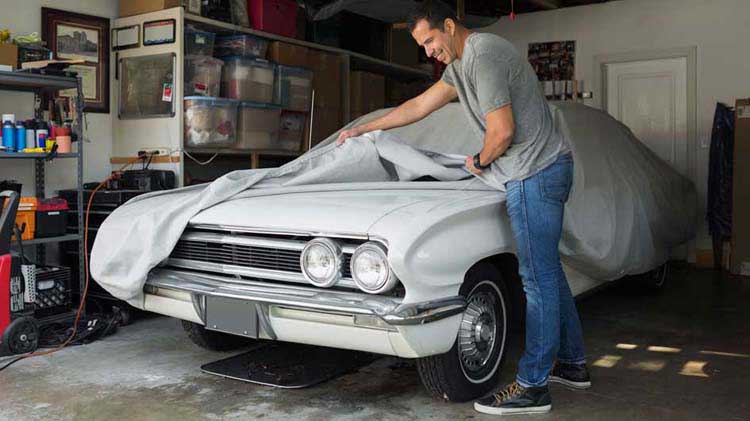
- Use a quality, breathable car cover
- Block entry points to deter pests, and remember to unblock them before driving.
- Keep the storage area secure and dry
Your vintage car deserves the same care in storage as on the open road. With a little attention now, you may be able to help avoid common classic car storage pitfalls and help keep your classic car safe.
For more collector car storage tips, or to begin the process of valuing your classic car for insurance or getting classic car insurance, talk to your local State Farm® agent.
The information in this article was obtained from various sources not associated with State Farm® (including State Farm Mutual Automobile Insurance Company and its subsidiaries and affiliates). While we believe it to be reliable and accurate, we do not warrant the accuracy or reliability of the information. State Farm is not responsible for, and does not endorse or approve, either implicitly or explicitly, the content of any third-party sites that might be hyperlinked from this page. The information is not intended to replace manuals, instructions or information provided by a manufacturer or the advice of a qualified professional, or to affect coverage under any applicable insurance policy. These suggestions are not a complete list of every loss control measure. State Farm makes no guarantees of results from use of this information.
State Farm Classic Insurance Company
State Farm Mutual Automobile Insurance Company
State Farm Indemnity Company
Bloomington, IL
State Farm County Mutual Insurance Company of Texas
Richardson, TX