What to do after a hit and run accident
Do you know what to do if someone hits your car? Consider taking these steps if you find yourself in this situation.
Overview: A hit and run accident can be stressful, but taking the necessary steps, such as assessing safety, contacting your insurer and gathering evidence, can help you navigate the situation more smoothly. Additionally, depending on your policy and state, your auto insurance may cover expenses through collision coverage, uninsured motorist coverage or possible subrogation recovery.
Auto accidents are stressful enough. Add the element of a hit and run, and it may leave you feeling helpless. Fortunately, there are some steps you can take to make the process as smooth as possible.
What is a hit and run accident?
A hit and run accident is when someone involved in the accident, leaves without stopping and exchanging or providing information. This could occur in traffic or in a parking lot. In many jurisdictions, it's a misdemeanor unless someone is injured (in which case it could become a felony charge).
As with any collision, you must carefully document hit and run accidents for both the police and your insurance company, which can be a little tricky since one driver has taken off.
Here is what to do first after a hit and run
When one party in an accident flees, it's important to call the police, stay and talk to them and any witnesses. Depending on the state, uninsured bodily injury (UBI) and uninsured property damage (UPD) require the police to be called within 24 hours of the accident for coverage to be applicable.
- Assess your safety. Check yourself and your passengers for injuries, performing a head-to-toe assessment. If possible, safely move your vehicle out of traffic; if not, exit to a safe spot away from oncoming cars.
- Call the police immediately, especially if someone is injured. Wait for an officer to arrive and file an accident report. In the case of a severe injury to the driver or a passenger, an ambulance transport may take priority.
- Collect as much information about the driver, car and accident as possible. This includes:
- License plate number (if you saw it)
- Names of witnesses (some states may need that information for UBI and UPD to apply)
- The other vehicle's make, model and color
- Description of damage to the other vehicle
- Description of the other driver, if available (male/female, young/old, etc.)
- Which direction the other vehicle was headed
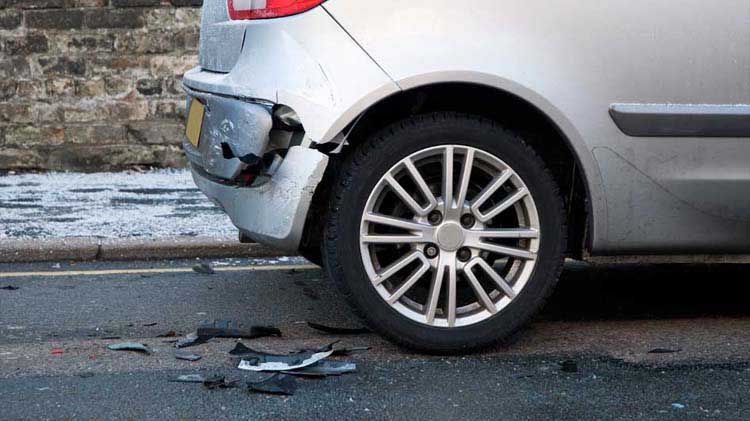
- Photos of the damage to your vehicle
- Location, date, time and cause of the accident
- Ask witnesses if they can supply additional information about the accident. If they give you or the police a statement, see that you get their names and contact information. Witness information can be especially helpful if the hit and run occurred when you were not with your vehicle.
- Check for surveillance footage. Nearby businesses, traffic lights and municipal cameras or dashcams may have captured video of the incident. If you can locate that, you'll have an additional tool that may help police identify the at-fault driver and strengthen your insurance claim.
- Notify your insurance company as soon as possible. Give your agent a detailed account of what happened and ask what steps to take next. Acting quickly can help ensure your claim is processed smoothly and that nothing falls through the cracks.
Here are some things to consider avoiding
If you’re the victim of a hit and run accident, it’s important to refrain from the following:
- Don’t lose your temper. Emotions may be high, but allowing things to escalate can make a bad situation worse.
- Don’t follow the fleeing driver. Leaving the scene of the accident could put you in a compromising position. You might miss getting eyewitness accounts, and police could question who's really at fault. Additionally, you run the risk of getting into another accident or putting yourself in a dangerous situation.
- Don’t wait to call the police or your insurance company to file a police report or an accident claim. The official accident report can help police look for the missing driver and be useful when you file your accident claim.
Does insurance cover a hit and run accident?
If you're involved in a hit and run, your auto policy may cover some expenses. It's important to note that coverages will vary by state. If you are a State Farm customer and want to learn more about your current coverage or need to file a claim, consider logging into My Accounts or downloading the State Farm mobile app.
Below are key insurance coverages and terms to know about hit and run accidents.
*Check with your insurer to determine what coverage applies to your situation.
Your insurance agent can be a good resource if you find yourself in this unfortunate situation. For more information, read our tips on what to do after an accident.
The information in this article was obtained from various sources not associated with State Farm® (including State Farm Mutual Automobile Insurance Company and its subsidiaries and affiliates). While we believe it to be reliable and accurate, we do not warrant the accuracy or reliability of the information. State Farm is not responsible for, and does not endorse or approve, either implicitly or explicitly, the content of any third party sites that might be hyperlinked from this page. The information is not intended to replace manuals, instructions or information provided by a manufacturer or the advice of a qualified professional, or to affect coverage under any applicable insurance policy. These suggestions are not a complete list of every loss control measure. State Farm makes no guarantees of results from use of this information.
This is only a general description of coverages and is not a statement of contract. Details of coverage or limits vary in some states. All coverages are subject to the terms, provisions, exclusions and conditions in the policy itself, and in endorsements.
Neither State Farm nor its agents provide tax or legal advice.
State Farm Mutual Automobile Insurance Company
State Farm Indemnity Company
Bloomington, IL
State Farm County Mutual Insurance Company of Texas
Richardson, TX