What to do if hit by an uninsured driver
Hit by an uninsured driver? Learn the crucial steps to take immediately after the crash and how to navigate the uninsured motorist (UM) claim process.
Overview: Being involved in an accident with an uninsured driver can be overwhelming, especially when it comes to covering damages and expenses. When the at-fault driver lacks insurance, your own uninsured motorist (UM) coverage often becomes essential for financial protection. This article outlines what to expect after such an accident, how UM coverage may help with costs like medical bills, lost wages and vehicle repairs and how to navigate the claims process to help minimize your financial impact if you’re hit by an uninsured driver.
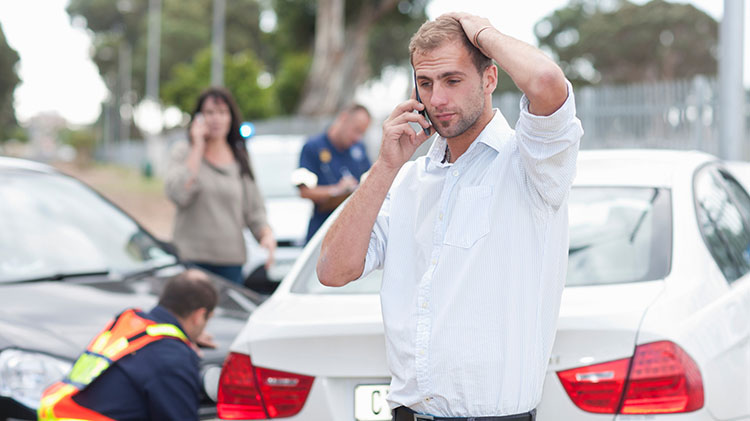
Imagine you’re driving home from work when another car hits you. As you exchange information, you discover the other driver doesn’t have insurance. Understanding your car insurance coverage and what steps you might take next may help you prepare for this type of situation.
In these cases, your own auto insurance policy — especially uninsured motorist (UM) coverage — plays a key role. UM coverage isn’t just for when you’re driving your own car; it also applies if you or resident relatives are struck as pedestrians, or while riding in a non-owned vehicle. This article breaks down the steps to take after a crash with an uninsured driver, how to file a UM claim and how this coverage can help with recovery, lost wages and repairs.
Steps to take after a car accident caused by an uninsured driver
If you’re in an accident caused by an uninsured driver, follow these steps and prioritize everyone’s safety:
1. Check for injuries and call 911
Ensure everyone is okay. Call 911 to request police and medical assistance, if needed. Ask for police to come to the scene, as having a police report is important, especially when dealing with uninsured drivers, hit-and-runs or substantial damage. The police report provides critical documentation about the accident and the other driver’s insurance status, which will help your insurance claim. Many states also have laws requiring you to report accidents to the police if property damage exceeds a certain amount or if there are injuries. Additionally, your policy may require you to notify the police in specific situations.
2. Gather information
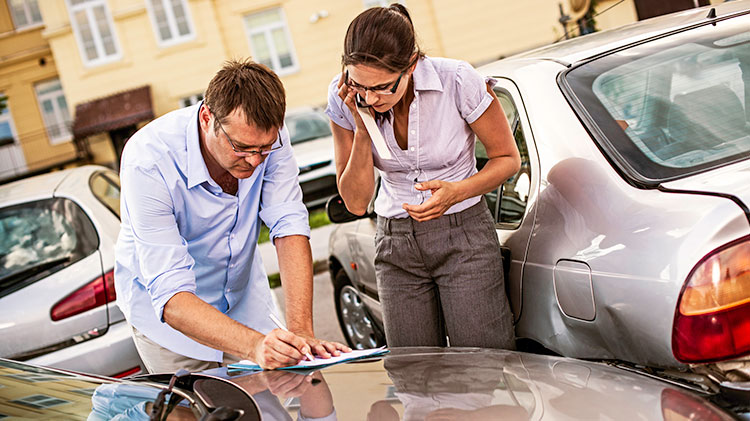
Exchange information with the other driver including names, contact and vehicle information. You won’t know whether they have insurance until after you exchange details, so be sure to ask for their insurance information as well as their driver’s license and license plate. If they don’t have insurance, you should still collect their identification and vehicle details. Additionally, talk to witnesses and get their contact information if possible.
3. Document the scene
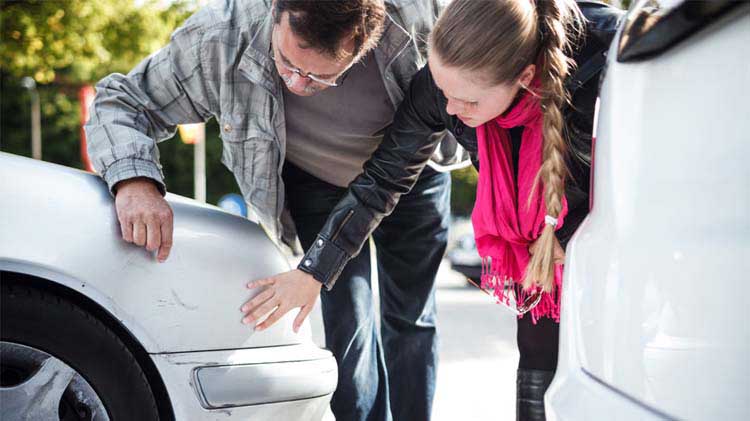
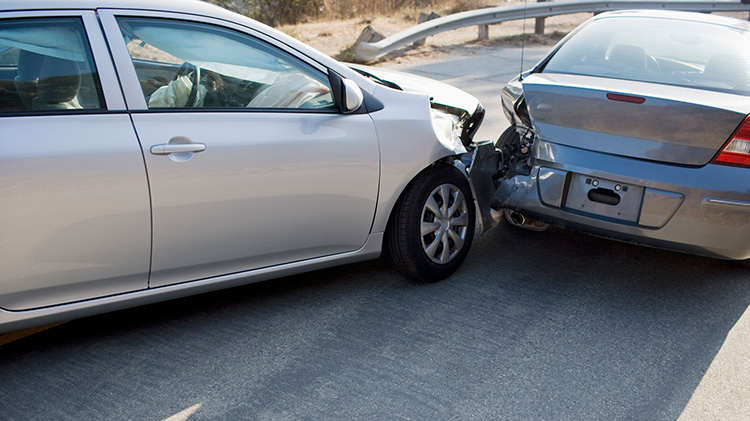
Take photos on your phone. Take photos of both vehicles, including photos of the damage to both vehicles and license plates. It may also be helpful to capture photos of the scene of the accident to help your insurance company understand what happened. Take caution and avoid putting yourself in danger to secure photos.
4. Avoid roadside deals
Never accept cash or promises from the uninsured driver in exchange for not reporting the crash. This can make things harder later, especially with insurance.
5. Notify your insurance company
Contact your insurer as soon as possible to report the accident. If the other driver doesn’t have insurance, your company will help you start an uninsured motorist (UM) claim. (See below for what happens next in the UM claim process.)
How your uninsured motorist (UM) coverage helps
Uninsured motorist coverage is designed to help in crashes where the other driver is at fault but can’t pay for your injuries or damages. There are usually two types of UM coverage on your policy:
Navigating the UM claim process
Without the other driver’s insurance to help, you’ll rely on your own company and policy. Here’s what happens next:
1. Claim initiation
After you report the accident, your insurer will formally open a UM claim and assign an adjuster to your case.
2. Investigation and cooperation
Your insurance company investigates the accident. They might ask for the police report, photos, witness details, medical bills and evidence of lost wages. Cooperate fully so your claim moves forward smoothly.
3. Determining fault
Your insurer needs to confirm the uninsured driver caused the accident. Police reports and witness statements help establish who was responsible.
4. Validating uninsured status
Insurance companies use police reports and state records to verify the other driver didn’t have insurance.
5. Settling the claim
After reviewing the details and gathering any necessary bills and records, your company determines the value of your claim. This process helps you recover money for your injuries, lost wages, and pain and suffering.
How long does it take to settle a UM claim?
Settlement times vary by case and state. Most UM claims can take anywhere from a few weeks to a couple of months, depending on the investigation, documentation and complexity of your injuries or damages. Your insurer must confirm the other driver's fault and uninsured status, as well as gather the necessary medical bills, records and repair bills. For some complex claims, it can take longer, especially if there are disputes about fault or coverage amounts.
What happens if you don’t have uninsured motorist coverage?
Having UM coverage is highly recommended, and in some states, you are required by law to carry it as part of your auto insurance policy. UM coverage helps provide financial protection for you and your passengers if you’re in an accident caused by an uninsured driver.
Without it, your options are limited:
- You can try suing the at-fault driver, but recovery is hard if they don’t have assets.
- Health insurance can help pay for medical bills, but it won’t help with lost wages or pain and suffering.
- Collision coverage (if you have it) can help with vehicle repairs, but you’ll have to pay its deductible.
Will my insurance go up if I get hit by an uninsured driver?
Rates can go up after any accident depending on your insurer, driving history and claims record. Always ask your insurance agent about potential rate changes.
Helping protect yourself in case of an accident with an uninsured driver
Accidents with uninsured drivers are tough, but knowing what steps to take — and having UM coverage — gives you financial protection. UM coverage helps pay for your injuries, expenses and possibly repairs when the at-fault driver can’t.
You can get an auto insurance quote now, or give us a few details and a State Farm® agent will reach out to you.
The information in this article was obtained from various sources not associated with State Farm® (including State Farm Mutual Automobile Insurance Company and its subsidiaries and affiliates). While we believe it to be reliable and accurate, we do not warrant the accuracy or reliability of the information. State Farm is not responsible for, and does not endorse or approve, either implicitly or explicitly, the content of any third-party sites that might be hyperlinked from this page. The information is not intended to replace manuals, instructions or information provided by a manufacturer or the advice of a qualified professional, or to affect coverage under any applicable insurance policy. These suggestions are not a complete list of every loss control measure. State Farm makes no guarantees of results from use of this information.
Please remember that the preceding descriptions contain only a general description of available coverages and are not a statement of contract. All coverages are subject to all policy provisions and applicable endorsements. Coverage options may vary by state. To learn more about auto insurance coverage in your state, find a State Farm agent.
Individual premiums and budgets will vary by customer. All applicants subject to underwriting requirements.
This content was developed with the help of AI and reviewed by State Farm editors.
State Farm Mutual Automobile Insurance Company
State Farm Fire and Casualty Company
State Farm General Insurance Company
State Farm Indemnity Company
Bloomington, IL
State Farm Florida Insurance Company
Orlando, FL
State Farm County Mutual Insurance Company of Texas
State Farm Lloyds
Richardson, TX