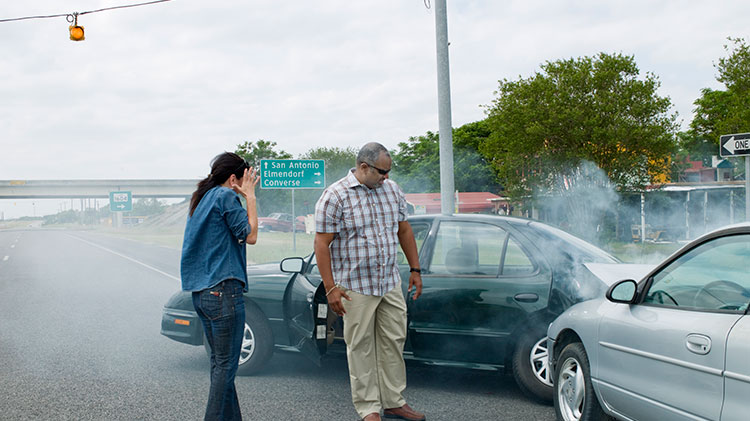
What is uninsured and underinsured motorist coverage?
Learn why uninsured (UM) and underinsured (UIM) motorist coverage is important car insurance protection if you're in a crash with someone who is not insured or does not carry enough insurance.
Overview: Uninsured motorist (UM) and underinsured motorist (UIM) coverage are types of auto insurance that help pay your expenses if you’re in an accident caused by a driver who has no insurance or not enough insurance to cover your damages. These coverages help protect you and your passengers financially by covering costs such as vehicle repairs and medical bills when the at-fault driver can’t pay. This article explains what UM and UIM coverage are, why they’re important and the simple steps you can take to help ensure you’re protected every time you drive.
Car accidents can be stressful, but the situation can become much worse if the other driver doesn’t have enough insurance — or any insurance at all — to cover your injuries or car repairs. While most people know car insurance is required to drive legally, many don’t realize what happens if you’re hit by a driver who can’t pay for the damages. In fact, more than one in seven drivers nationwide are uninsured, according to the Insurance Research Council (IRC), and many others carry only the minimum required insurance, which often isn’t enough after a serious accident.
So, what happens if you’re in an accident with one of these drivers? That’s where uninsured motorist (UM) and underinsured motorist (UIM) coverage come in. These important coverages can pay for your medical bills, lost wages and sometimes car repairs if the at-fault driver can’t pay. In some states, there’s also uninsured property damage (UMPD) coverage, which may help pay for repairs to your vehicle if the other driver has no insurance. However, not all types, like UMPD, are available in every state.
The difference between uninsured and underinsured motorist coverage
Understand the differences and how each type of coverage works:
What is uninsured motorist coverage?
UM coverage helps protect you if you’re hurt or your car is damaged by a driver without any auto insurance. In some states, it also covers hit-and-run situations when the responsible driver can’t be found. There are usually two forms:
- Uninsured Motorist Bodily Injury (UMBI) — covers medical bills, lost wages and sometimes pain and suffering for you and your passengers.
- Uninsured Motorist Property Damage (UMPD) — may help pay for repairs to your vehicle if the at-fault driver has no insurance, depending on your state and policy.
What is underinsured motorist insurance?
UIM coverage applies when the other driver has insurance, but it’s not enough to pay for your injuries or car repairs. The way UIM coverage works can vary by state. Some states offer “difference in limits” UIM policies, which cover up to the difference between the limits of the at-fault driver’s liability policy and the higher limit of your UIM policy. Others use “difference in damages” coverage, which pays the difference between your actual damages and what the liability policy covers, up to your UIM policy limits.
For example: If your medical bills total $50,000 and the at-fault driver’s policy only covers $25,000, your UIM coverage could help pay the remaining $25,000, up to the limit you chose for your policy — but only in states with difference in damages coverage. In difference in limits states, if your UIM limit is $25,000 and the at-fault driver’s liability limit is also $25,000, your UIM policy would not pay anything.
Why uninsured and underinsured motorist coverage matters
- Accidents with underinsured drivers can have significant financial consequences. Even if most drivers carry some insurance, many don’t have enough to cover all damages in a major crash, leaving you exposed to large out-of-pocket expenses.
- State minimums may not be sufficient. Most states require only modest amounts of liability insurance, which often aren’t enough to pay medical bills or fix your car after a major crash. Without UM/UIM, you could get stuck paying thousands out of pocket.
- UM/UIM fills gaps left by health insurance. Health insurance may not cover all costs after a crash. UMBI insurance and UIM coverage can also help cover lost wages and pain and suffering — things your health plan may not include. These coverages can also help passengers in your vehicle who might not have health insurance.
- Protection for your finances. With adequate UM/UIM coverage, you’re less likely to be left paying for someone else’s mistake. It helps protect your savings and financial stability, even after a serious accident.
Common questions about UM and UIM coverage
- Is UM/UIM expensive? The cost of UM/UIM coverage depends on several factors, including your location, driving history and insurer — so premiums vary for each individual. Generally, UM/UIM is often less expensive than other types of auto insurance, such as comprehensive and collision coverage. For some drivers, adding this protection may lead to a small increase in their overall premium, which can be a more affordable way to enhance their financial security.
- How much coverage should I have? Consider choosing UM/UIM limits that match your bodily injury liability limits if possible. This provides you with equal protection whether you’re at fault or someone else is. If that isn’t feasible, having some UM/UIM coverage is still better than none. Your insurance agent can help you decide on the right coverage amount for your needs and budget.
- Will my insurance rates go up if I use it? Filing any claim can potentially impact your premium, depending on your insurance company and the type of claim. However, UM/UIM is specifically designed to help when you aren’t at fault and the other driver can’t pay.
Simple steps to help protect yourself
- Check your state requirements. Some states make UM/UIM coverage mandatory; others require insurers to offer it to you. To learn more, check your state’s department of insurance website.
- Review your current policy. Look at your declarations page to see if you have UM/UIM coverage, and how much.
- Consider your finances. Could you pay large hospital or car repair bills if the other driver had no insurance? If not, increasing your UM/UIM limits may be smart.
- Talk to your insurance agent. Ask your agent to explain your current coverage. Request quotes for higher limits and if available in your state, ask if UMPD coverage makes sense for you.
- Don’t skip UM/UIM, even if it’s optional. While the decision is ultimately yours, this coverage usually costs just a little extra and provides valuable protection against uninsured and underinsured drivers.
Getting the right protection for you may be easier than you think
Understanding “what is uninsured and underinsured motorist coverage” is key to helping protect your finances and your passengers. Check your policy and talk to your agent. It’s a simple step that may make a big difference if the unexpected happens.
You can get an auto insurance quote now, or give us a few details and a State Farm® agent will reach out to you.
The information in this article was obtained from various sources not associated with State Farm® (including State Farm Mutual Automobile Insurance Company and its subsidiaries and affiliates). While we believe it to be reliable and accurate, we do not warrant the accuracy or reliability of the information. State Farm is not responsible for, and does not endorse or approve, either implicitly or explicitly, the content of any third-party sites that might be hyperlinked from this page. The information is not intended to replace manuals, instructions or information provided by a manufacturer or the advice of a qualified professional, or to affect coverage under any applicable insurance policy. These suggestions are not a complete list of every loss control measure. State Farm makes no guarantees of results from use of this information.
Please remember that the preceding descriptions contain only a general description of available coverages and are not a statement of contract. All coverages are subject to all policy provisions and applicable endorsements. Coverage options may vary by state. To learn more about auto insurance coverage in your state, find a State Farm agent.
This content was developed with the help of AI and reviewed by State Farm editors.
State Farm Mutual Automobile Insurance Company
State Farm Fire and Casualty Company
State Farm General Insurance Company
State Farm Indemnity Company
Bloomington, IL
State Farm Florida Insurance Company
Orlando, FL
State Farm County Mutual Insurance Company of Texas
State Farm Lloyds
Richardson, TX