Hurricane evacuation and preparedness plan
When a hurricane requires evacuation, here's what you can do to help protect your home, pets and property.
Overview: During hurricane season, having a hurricane evacuation checklist and kit can be very important. Your evacuation kit should include water, non-perishable food, medications, important documents, flashlights, batteries and first aid supplies. Preparing your car with gas and knowing local evacuation routes can also be helpful if a hurricane arrives. If you are in a flood zone or danger area, it’s safer to leave, and consider getting hurricane insurance to help protect your home from storm damage.
By making a hurricane evacuation plan you can help keep you, your family and your pets safe. Additionally, it may be helpful to prepare any boats, RVs or home prepared for a hurricane as a part of your hurricane preparedness plan.
Get a homeowners insurance quote
Want to protect your home?
Hurricane evacuation checklist
Consider including the following in your family evacuation plan:
- A meeting place — If your family isn't together when the evacuation order is given, set a meeting place to reconnect. This could be a church, school or even a location in a nearby town. Be aware of the disaster plans of your workplace and children's schools and consider how they might affect your meeting place.
- A designated out-of-state friend or relative as a family contact — This person can help update everyone in case your family is separated.
- Emergency cards — These cards can list the meeting places in priority order along with important phone numbers, addresses and your designated contact’s information.
- A safe area for your location — Determine a storm shelter for you and your family, and let friends and relatives know the safe area’s location in advance.
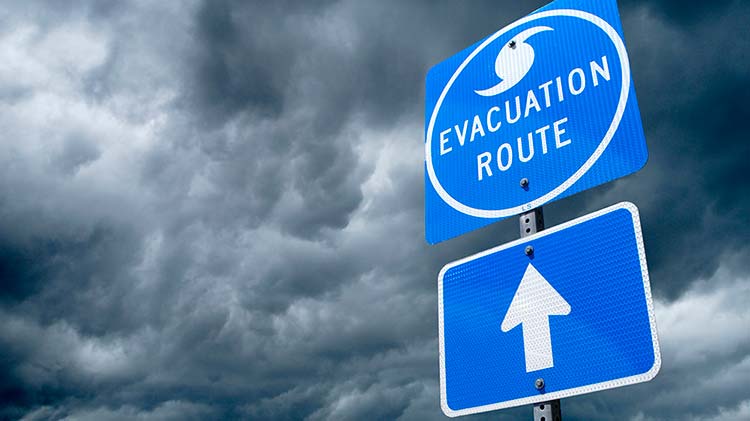
- Evacuation routes — The first route to your public evacuation shelter should be the fastest routes from your home, workplace or meeting location. It may be helpful to consider alternate routes as well, in case of flooding, downed trees and washed-out bridges.
- Care for your pets — Review your city or county's evacuation plan to learn what local agencies or facilities might be able to house your pet during a hurricane.
- Car safety — Fill your gas tanks in case the power goes out and pumps are not working, and have a hurricane evacuation kit ready to go in your vehicle.
- Time-to-go bags — Identify who will grab the necessary bags and lock all the doors and windows.
Hurricane evacuation kit
Have a backpack, duffle bag or small suitcase with the essentials to help survive a few days away from home. Consider including the following items:
- Clothes for a couple of days
- Copies of important documents like your insurance policies, the deed to your house and any necessary identification cards for each person
- Waterproof, battery-powered or hand-crank-powered flashlights. Also radios with replacement batteries to monitor local weather advisories
- A supply of prescription medication along with medical records for each person. Check with your physician or pharmacist whether you can store your medications with your survival kit and the best way to do so.
- Cash – ATMs and credit card machines might not be working
- An extra set of keys for your house and car
- Extra chargers for your phone
- A copy of your evacuation plan
- Water, food and medications — at least a 10-day supply
- Veterinary records and proof of vaccinations
Once you’ve created your evacuation kit using your checklist, remember to update your kit once a year based on your family's changing needs.
A hurricane emergency car kit
Place items in airtight plastic bags and store them in an easy-to-carry container, such as a plastic storage container with a lid or a duffle bag. Consider the following items for your kit:
- Drinkable water — 1 gallon per person, per day
- Sealed, prepared meals — at least a 10-day supply for each person. Remember to change the water and food supply every six months
- A first aid kit and any extra supplies for medical conditions
- A few blankets
- A phone charger for the car
- A whistle or other sound-signaling device
- Local and regional road maps
- A multi-tool with a knife
- Toiletries including garbage bags, toilet paper and paper towels
- Waterproof bags or containers
- A gas can
- Jumper cables
- A towline
Should we evacuate or stay?
Officials in your area or state may issue orders to evacuate or stay, depending on weather and traffic conditions.
Evacuating your home
There are two types of orders: mandatory and voluntary evacuation. Both employ an evacuation formula that helps officials decide what areas and populations should leave first. These are usually those most susceptible to flooding and severe damage.
Mandatory evacuation
If this type of evacuation order is issued, you must, by law, leave. Use only roads identified as evacuation routes, even if they are heavily trafficked. Other routes may be closed, and you could be forced to turn around, losing valuable time.
Order to stay
Officials may determine it's safer to remain in your home if leaving could lead to gridlock and danger for people to be trapped in their vehicles. If you are weathering the storm at home, check out these hurricane safety tips.
Should we stop anywhere if we evacuate?
Once you're packed and on the road, try not to stop unless traffic necessitates it. Stopping for food or drinks could significantly slow your evacuation.
What if we get split up?
Decide in advance on two different meeting points in case your family or group gets split up. Your first meeting place may be made inaccessible by the storm, so it's important to have a backup meeting location.
Can I get hurricane insurance?
Check with your insurer to determine if your house, condominium or rental property is protected in the event of a hurricane. This could include damage sustained due to wind and rain caused by the effects of the hurricane. If your home is in an area of higher hurricane risk, you could encounter a deductible established solely for hurricanes.
A State Farm homeowner's insurance policy does not cover flood insurance. Flood insurance coverage may be purchased through the federal government's National Flood Insurance Program. If you live in an area prone to hurricanes or flooding, talk to your insurance agent about flood insurance and know what's covered.
With some preparation, you may be better able to manage the next hurricane evacuation order. Before you start any clean up from the hurricane on your property after the storm, contact your insurance agent with any reports of damage.