How driving rules may have changed for today’s teen drivers
Driving rules may be different today than when you learned to drive. Before you teach your teenager about driving, read these tips.
Teaching your child how to drive is an important milestone, but it can feel overwhelming if you aren’t sure where to start.
Today’s driving basics may look different compared to when you learned. Understanding up-to-date driving rules can help you teach your teen how to drive. This can help ensure that your child becomes a safe and confident driver while also allowing you to feel less stressed during the process.
Refreshing your memory on the rules of the road
As you are teaching your teen how to drive a car, remember common driving and traffic laws that you may not have considered since you learned to drive:
- Follow all speed limits, which can change depending on the area.
- Always pay attention to the road.
- It is never okay to text while driving, no matter how confident you may be.
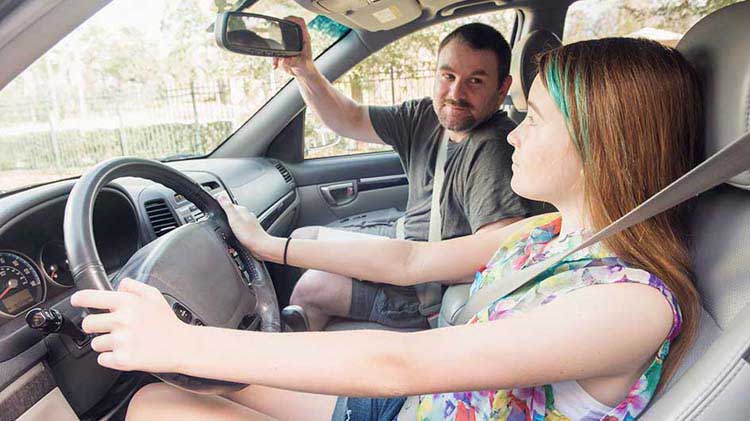
- Maintain an upright posture with both hands on the wheel.
- Always wear a seat belt and encourage others in the vehicle to do the same.
- Respect other drivers by letting them merge and keep a safe distance from other cars on the road.
- Watch out for cyclists and pedestrians who may cross the street at unexpected times or places.
Rules regarding road signs
Remind your teen that road signs show where and how fast to drive. Encourage them to practice reading road signs out loud and to pay attention to pedestrian crossings, school zones and other areas where extra caution is important. Defensive driving means staying alert, anticipating the actions of other drivers and pedestrians and being prepared to react safely to unexpected situations. Practicing defensive driving helps everyone stay safe.
- Come to a complete stop at stop signs and red lights.
- Right-of-way rules tell drivers when it’s their turn to go. If two cars arrive at an intersection at the same time, the driver on the right usually goes first.
- Stop signs require you to stop, even if the street looks empty.
The proper steering wheel hand position
One of the first things to review with your teen is proper steering wheel hand positions. Years ago, drivers were taught to hold the steering wheel at the 10 and 2 o’clock positions. Today, the National Highway Traffic Safety Administration (NHTSA) recommends drivers put their hands at the 9 and 3 o'clock positions. This is to potentially keep hands out of the way if your airbag deploys.
Learning push-pull steering method
Turning the steering wheel is another skill that has evolved. While “hand over hand steering” was once taught to make sharp turns, many instructors recommend the “push-pull” method today. Instead of crossing arms over each other, push up on one side of the wheel while pulling down with the other hand.
This change can help drivers maintain better control of the vehicle while helping to protect their hands and arms. Specifically, the “push-pull” steering method may help reduce the risk of the driver’s hands or arms becoming caught in the steering wheel or injured during sudden turns or if the airbag deploys.
Eliminating distractions before driving
Today's distractions are one of the biggest risks for new drivers and come from more than just the radio. Cell phones, navigation apps and loud conversations in the car can take attention away from the road.
Even with hands-free devices, there are still risks for new and experienced drivers. Talking or making phone calls, searching for tunes on a media player, using apps, checking social media or playing the radio too loudly can all be very distracting and contribute to heightened risks for new and experienced drivers alike.
Note: Laws regarding cell phone use while driving vary by state. In some states, drivers under 18 or 19 are prohibited from using hands-free devices altogether. Be sure to review and follow your state’s specific regulations to help keep your teen safe and compliant.
Teaching cell phone safety
It's likely your teen will have a cell phone when driving. Remind your teen to never use their phone while driving—including texting, browsing apps or checking notifications. Encourage them to pull over to a safe location before using their phone for any reason.
To help them form safe habits while driving, always keep your phone away when driving. Show your new driver how to maintain a safe, distraction-free environment by playing music at a moderate volume and focusing solely on the road.
Teaching proper car following distance
You may have been taught to keep one car length for every 10 MPH between your vehicle and the one ahead of you. Today, instructors recommend a simpler method called the three-second rule: Choose a fixed object on or near the road ahead, such as a sign or tree. When the car in front passes that object, start counting seconds (“one thousand one, one thousand two, one thousand three”). If you reach the object before finishing the count, increase your following distance.
Maintaining a proper following distance is especially important because the faster you drive, the longer it takes to stop safely. Higher speeds increase stopping distance due to the greater momentum of your vehicle and reduce the time available to react to sudden changes in traffic. By keeping a sufficient gap, you give yourself more time to notice hazards and brake smoothly, helping to prevent collisions.
Learning about car technology
Today's vehicles are far more 'intelligent' than the cars you grew up driving. Many features are designed to help keep drivers safer, such as anti-skid controls, automated parallel parking and sensors that stop a car before a collision. However, it’s important for teens to first learn essential driving skills and how to respond to different situations without relying solely on these technologies. As you teach your child to drive, be familiar with your vehicle’s technology so you can decide how and when your teen should use these features.
Practicing safe driving while earning discounts
One way to help your teen develop safe driving habits — and potentially save money on auto insurance — is by enrolling in teen auto discount programs. These programs reward responsible driving through various benefits and educational tools.
Discounts based on safe driving habits
For example, some insurance companies like State Farm®, offer discounts such as Steer Clear® based on safe driving behaviors. These programs may include training videos, safe driving quizzes and trip tracking to help improve your teen’s driving skills.
By completing approved driver education courses and applying safe driving habits, your teen may be able to save money on auto insurance. Talk to your insurance agent to learn more about these possible discounts.
Applying student discounts using technology
Modern technology can help you or your child track their driving habits. Usage-based insurance programs, such as Drive Safe & Save®, often use a mobile app to record speed, braking and phone usage while driving. Participation in these programs can help save money and encourage safe driving.
Supporting your child beyond the basics
Teaching how to drive is more than just explaining driving rules. Be patient, offer positive feedback, and discuss situations like driving in the rain or heavy traffic. There are many resources online if you need guidance when teaching your teen to drive.
Always stay up to date with the newest guidelines and encourage your teen to respect driving rules. Safer driving benefits everyone on the road. For more details, explore these resources from State Farm® to find tools and tips for teaching your teen to drive and helping to secure your family’s safety on the road.
Setting a good driving example
Your teen most likely learns a lot by watching you drive. Even when you are driving alone, follow driving rules and practice defensive driving when your teen is in the car. Set a strong example by wearing your seat belt, obeying speed limits and staying focused behind the wheel.
Encourage open conversations about driving so your teen feels comfortable asking questions or sharing concerns. By modeling good behavior, you can help your teen develop safe driving habits that will last a lifetime.
The information in this article was obtained from various sources not associated with State Farm® (including State Farm Mutual Automobile Insurance Company and its subsidiaries and affiliates). While we believe it to be reliable and accurate, we do not warrant the accuracy or reliability of the information. State Farm is not responsible for, and does not endorse or approve, either implicitly or explicitly, the content of any third-party sites that might be hyperlinked from this page. The information is not intended to replace manuals, instructions or information provided by a manufacturer or the advice of a qualified professional, or to affect coverage under any applicable insurance policy. These suggestions are not a complete list of every loss control measure. State Farm makes no guarantees of results from use of this information.
Discounts may exceed 30% & vary state-to-state (NY capped at 30%). Not available in CA, MA & RI. Discount available in NC, depending on facts. Setup required.
This article was drafted with the help of AI and reviewed by State Farm editors.
State Farm Mutual Automobile Insurance Company
State Farm Indemnity Company
Bloomington, IL
State Farm County Mutual Insurance Company of Texas
Richardson, TX