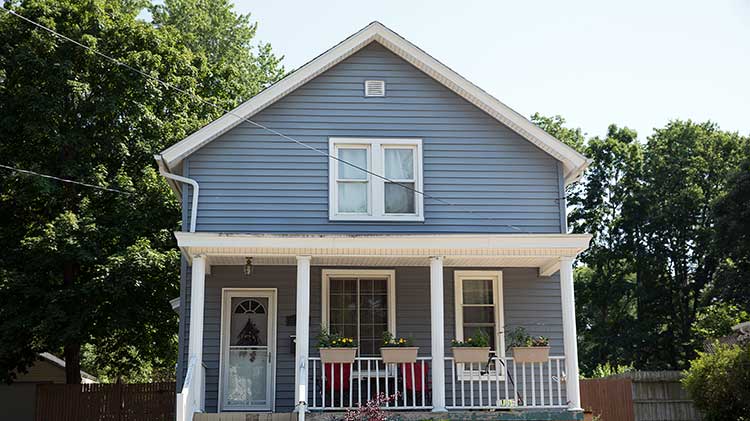
Steps to buy a house
Are you ready to buy a home? Get an idea of what to expect before and during the process of buying a home.
Home buying can be a complex process filled with jargon and unexpected challenges, especially for a first-time home buyer. Consider planning ahead for each stage of your move to potentially save yourself some headache and heartache. If you’re looking for what to know when buying a house for the first time, consider this first-time home buyer guide along with some fundamental concepts to help get you started.
Important things to look for in a new house
To help find the perfect home, consider what’s most important for your lifestyle, then prioritize your list of requirements. It’s true that location is key, but what makes a location ideal to you? Here is a list that may help you decide what matters to you most:
- Location — would you prefer a lively community or privacy and quiet?
- Commute — do you want to walk to work? Drive? Take the train? Maybe you can work from home?
- Amenities — is convenience to shopping and transit more important than a bigger yard?
- Future plans — do you or will you have kids? Are good schools important now or might they be in the future? Whether or not you plan to expand your family is a key question to ask before you buy.
Moving can be expensive, a lot of work — or both! That means long-term planning can be important at this phase. If there are two bedrooms now, will you need to add a third? Is the roof in good shape? Is the heating and A/C system new or will it need to be repaired or replaced sometime soon? Try to honestly assess your tolerance for maintenance before you buy a house that’s older, larger or has a lot of property. If you love gardening, that’s great. But do you love mowing the lawn? These are the kinds of questions you should ask yourself in addition to the most basic gut check: If you can picture yourself living there, does it make you happy?
Prepare and think long term
The more you can plan and save in advance, the more options you’ll have for the home you are able to buy. If you can, create a line item in your monthly budget dedicated to saving for a home down payment. From there, it can be a good idea to prioritize debt repayment. Additionally, lessening your financial obligations and maintaining a good credit score could potentially help save you thousands of dollars over time.
There are various first-time home buyer programs available that can assist you with paying for your first house. Down payment assistance (DPA) loans and grants can help offset the significant cost associated with making a down payment on a home. Tax deductions and closing assistance programs are also available to help a first-time home buyer with financing.


Cost of down and monthly payments
As you grow your down payment savings, keep the 20% guideline in mind — that’s the total down payment toward your purchase price that enables you to get certain types of mortgages without the monthly expense of private mortgage insurance (PMI).
Consider what price point you can afford for your house. Mortgage lenders may use the 28/36 rule. This rule states that 28% of your gross monthly income should be the maximum spent on total housing expenses and that no more than 36% should be spent on your total debt (housing, car loans, etc.). Another commonly used and more conservative guideline recommends that your housing payment (including insurance and taxes) should not be more than 25% of your take-home income.
And don’t forget that owning a home includes other recurring costs such as homeowners insurance, maintenance, repairs and upgrades you might make to a home and in some cases Homeowners Association (HOA) dues.
Mortgage pre-approval
The mortgage pre-approval process includes a credit check, a review of your income, employment history, debt-to-income ratio and your liabilities and assets. The outcome of this information will determine whether you can be pre-approved.
Getting pre-approved can be beneficial to you as it can help the home-buying process move along faster. Being pre-approved shows sellers that you are a serious buyer and could give you an advantage over other buyers. Most pre-approval letters are valid for 60 to 90 days.
Steps of buying a home
Below are the general steps of the home-buying process, along with some tips for first time home buyers to consider:
Preparing
Like with many big life decisions, it can be easier financially and emotionally if you prepare beforehand. Even if you don’t expect to buy for a few years, there’s no time like the present to start learning about what to expect when buying a house for the first time. This includes steps like organizing your budget and keeping — or getting — your credit in good shape. You can request a free copy of your credit report from all three bureaus once a year, so try to take advantage of this offering. On the emotional side, buying a home is a big step in life. It’s worth checking in with yourself to see how you feel about that prospect before you start the process rather than during or after.
House hunting
When you are ready to start the search for the house of your dreams, our house hunting guide provides steps to consider. Two points to highlight are:
- If you are already approved by a mortgage lender, keep your pre-approval letter handy to present to sellers.
- Get recommendations from friends and family for trusted real estate professionals or mortgage lenders with a history of providing great experiences who can also help with your house hunt.
Using the services of a real estate agent or professional shouldn’t cost you, the buyer, unless you engage an exclusive buyer’s agent. Agents are usually compensated by commission paid by the seller. A real estate agent or professional can save you time and help with:
- Research by gathering information about the neighborhood that might not be easily available to the public.
- Negotiation skills when it’s time to make an offer.
- Execution of the steps for the home-buying process.
Making an offer
Once you’ve found a house you love, be prepared to act swiftly. The offer usually includes a "good faith" deposit, which takes the property off the market while the sale is being finalized. This is where your real estate agent can be invaluable. They know the market and may even have insights about the seller. Especially when buying a home for the first time, an agent can advise you on making the most attractive offer without overextending yourself. Here are some things that should probably be considered during this next phase:
- Inspect — a professional contingent inspection is a good idea for new construction and older homes. You might want to attend the inspection and confirm it isn’t rushed. Your inspector is an important member of your team, pointing out any unseen defects you might want to negotiate to have fixed. If repairs are needed, you might be able to negotiate a lower price or include the completion of the repairs as a contingency of your offer.
- Appraise — an appraisal is a professional analysis of the home you're buying to determine the approximate market value of the property so that the lender can determine the loan amount they’re willing to provide. Because this is for the lender's benefit, they will choose the appraiser, but you will need to pay for the appraisal.
- Confirm — your lender should then double-check all the information relevant to the offer.
If your offer is rejected, you can walk away, but you could also make a counteroffer. If the seller provides a counteroffer of their own, discuss with your agent whether you'd be willing to accept or counter back. This process of negotiation is a natural part of the home-buying process and a chance to really get the value out of having an experienced buyer's agent in your corner.
If you’re selling your home and buying another, you might want to consider a contingency in your offer. A contingency clause allows you to back out if certain conditions (called "contingencies") aren't met. For example, a contingency might be that you must sell your existing home within a certain time frame as part of your agreement to buy a new home.
Waiting to close
This is likely the longest period you’ll have in the house purchasing phase until it becomes your home. It’s a good time to slow down and take stock. At this point, you may want to call a State Farm® agent to help you select coverage that’s right for you and your new house as your lender will require insurance to be in place before closing. Even if you don’t have a mortgage, insurance is a critical part of protecting your house from theft, accidents and weather.
There are also some day-to-day preparations you might want to start on as you wait. For example, you may want to give utility companies your move-in date to establish service — you don’t want to be living in the cold or dark without electricity or Wi-Fi. Fill out a change of address form at your local post office or on the USPS website to have your mail forwarded and let key people and institutions (friends, family, employer, bank, credit card companies, etc.) know your new address.
What happens at closing?
Be ready for all the costs that come with the home closing. Closing costs can vary, as they may include loan-origination fees, your home insurance premium, title insurance, survey, taxes and credit report charges. You may find it helpful to ask your lender for definitions and clarity if you see something you don't understand.
Near, or in some cases on, closing day, a final walk-through will be arranged where you'll inspect the property in person one more time along with your real estate agent. This is your chance to check that everything is as it should be per the terms of the sale. This can include things like verifying that any agreed-upon repairs have been completed, or that any appliances promised in the sale haven't been removed and/or work properly.
On closing day you’ll be all set to sign… and sign… and sign — there can be more paperwork involved than you might imagine. Often, you can receive the keys that day or within a few days of closing. You will also want to keep certain post-closing documents like the purchase agreement, addendums, disclosures and repair requests, escrow information, inspection reports and closing statement. Congratulations; you’ve just bought a house!
New homes and home insurance
Whether you’re buying or building a home, insurance is an important part of any new home. Conducting a home insurance assessment with a State Farm agent can help you determine your preferred policies and coverage. Consider inquiring about discounts for things like alarm systems or having multiple policies. You may want to select a policy amount equal to at least 100% of the estimated replacement cost of your home and its contents. Carefully review the limitations on coverage and consider adding insurance for valuable possessions like jewelry, fine art, collections, musical equipment, high-end electronics and other particularly valuable items.
This can also be a good time to create a home inventory, which could expedite things in the case of a future claim. This record of your assets can help you in the settlement of a covered loss or claim, it may also help verify tax-deductible property losses and help you determine the right amount of home insurance for your needs. You can create this inventory using smartphone apps, a video/visual record, a written list or all three. Save receipts and keep them in a safe place outside your home (like a bank safe deposit box).
Common home-buying mistakes
With this information at your fingertips, hopefully you're feeling more ready than ever to become a homeowner. Be forewarned though, there are some pitfalls to watch out for. Keep an eye out for these common first-time-buyer mistakes:
- Don’t forgo the pre-qualification letter. Pre-approval letters can make a difference when sellers are reviewing potential offers. In a competitive market, skipping the pre-approval process deprives you of a potential advantage.
- Don’t skip the home inspection. It can be tempting to think there's no need for an inspection. Home inspections are extremely important and help protect you from any nasty surprises before you commit to buying a home.
- Don’t forget a contingency clause. Purchasing a home is a major life event that often requires many different factors to line up properly. These contingencies can save you serious amounts of money, which is why they’re an important part of your home purchase agreement.
- Don’t overestimate your budget. What your lender believes you can afford may not always line up with what you’re comfortable spending. Track your finances carefully when considering the cost of a new home to know what you can truly afford.
If you’re feeling overwhelmed, that’s totally normal — there’s a lot to consider! Just learning how to buy a house can be an extensive process but remember that millions of homes are purchased every year. While it may feel daunting, with time and effort, you can succeed. Happy house hunting!
The information in this article was obtained from various sources not associated with State Farm® (including State Farm Mutual Automobile Insurance Company and its subsidiaries and affiliates). While we believe it to be reliable and accurate, we do not warrant the accuracy or reliability of the information. State Farm is not responsible for, and does not endorse or approve, either implicitly or explicitly, the content of any third-party sites that might be hyperlinked from this page. The information is not intended to replace manuals, instructions or information provided by a manufacturer or the advice of a qualified professional, or to affect coverage under any applicable insurance policy. These suggestions are not a complete list of every loss control measure. State Farm makes no guarantees of results from use of this information.
Neither State Farm nor its agents provide tax or legal advice.
State Farm Mutual Automobile Insurance Company
State Farm Fire and Casualty Company
State Farm General Insurance Company
State Farm Indemnity Company
Bloomington, IL
State Farm Florida Insurance Company
Orlando, FL
State Farm County Mutual Insurance Company of Texas
State Farm Lloyds
Richardson, TX