Airbag safety: Tips to help maximize airbag effectiveness
Success of airbag systems may depend on precautions the driver and passengers take.
Overview: Airbag safety starts with wearing a seat belt, sitting at least 10 inches back from the steering wheel and keeping children properly restrained in the back seat. Learn how airbags work, the types of airbags your vehicle may have and practical steps that can help improve airbag effectiveness and reduce injury risk.
Airbag safety matters because airbags are designed to work with seat belts to help lower the risk of serious head and chest injuries in a crash. The National Highway Traffic Safety Administration (NHTSA) estimates frontal airbags have saved 50,000+ lives in the U.S. Here’s how airbags work, when they deploy, the types of airbags you may have and steps drivers and passengers can take to help maximize protection.
How do airbags work?
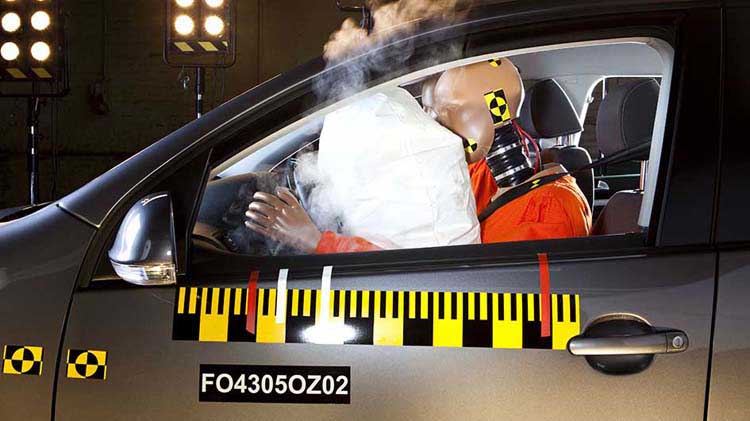
Airbags are part of your vehicle’s Supplemental Restraint System (SRS). In a crash, sensors send a signal to an inflator, which quickly fills the bag and creates a cushion between you and hard surfaces. The airbag then vents and deflates right away so you can move and see after the impact. This is one reason airbag safety depends on sitting back from the steering wheel and wearing a seat belt to keep you in the best position when the bag deploys.
When airbags are designed to deploy
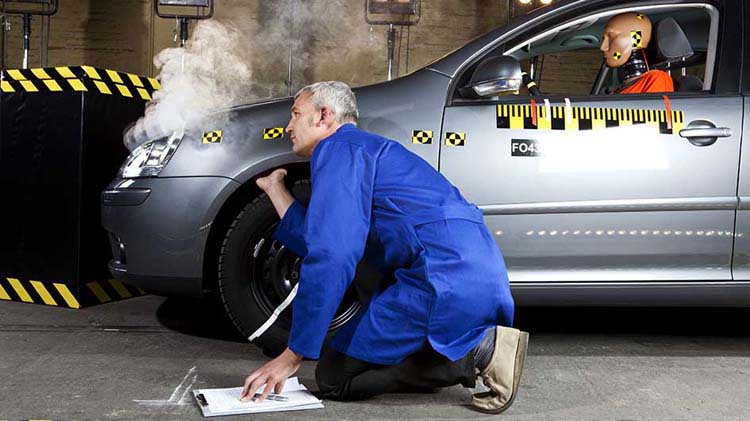
Airbags typically deploy in moderate to severe frontal and near-frontal crashes, and many vehicles also have side airbags and curtains for side impacts and some rollovers. When an airbag is deployed, it can inflate within the blink of an eye or less than 1/20th of a second. Airbags may not deploy in every crash, even if there is significant visible damage. Deployment depends on factors like crash angle, speed change (deceleration) and sensor data, not just what the vehicle looks like after impact. Always treat seat belts as your primary restraint.
Types of airbags and what they help protect
The Insurance Institute for Highway Safety (IIHS) and NHTSA explain how different airbag designs help protect different parts of the body, including the head, chest/torso, pelvis and lower legs. Your owner’s manual explains which airbags your vehicle has and where they’re located.
Airbag safety tips to help maximize protection
These airbag safety tips may help you get the benefit of the system while reducing the risk of airbag-related injury.
- Buckle up every trip. Airbags are supplemental.
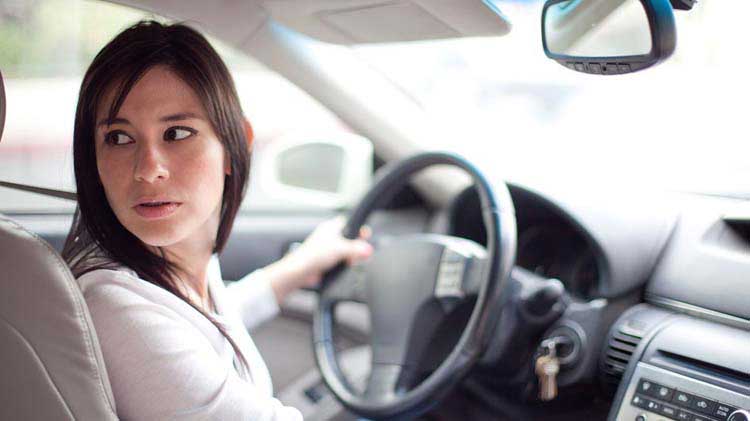
- Sit back and upright. NHTSA advises at least 10 inches from the center of the steering wheel (airbag cover) to the breastbone. Move the seat back as far as you can while still reaching the pedals safely. Front passengers should also sit back from the dashboard with the seat upright and avoid leaning forward.
- Keep both hands on the wheel in a safer position. Many safety groups recommend “9 and 3” for better control and to help reduce arm/hand injuries if the airbag deploys. Don’t lean on the door or rest your body against side airbag covers. Side airbags (often mounted in the seat or door) deploy quickly and need space to work as designed.
- Do not place objects over airbag covers. Dash mats or phone mounts can become dangerous projectiles or change how the bag deploys.
- Check the airbag warning light. If the SRS/airbag light stays on or flashes, have it checked promptly. A warning light can mean the system may not work as designed.
- Replace airbags after deployment. Deployed airbags and related components must be replaced and inspected after an accident. Replacement usually includes related components (e.g., seat belt pretensioners, sensors, airbag control module/ACM, clock spring, etc.) depending on the crash and vehicle.
Child passenger safety and airbags
Airbag safety is especially important for kids because they are smaller and more vulnerable to force from a deploying front airbag. NHTSA recommends keeping children under 13 properly restrained in the back seat when possible and never placing a rear-facing car seat in front of an active passenger airbag. Use the right car seat or booster for your child’s age and size and follow the seat and vehicle instructions.
Passenger airbag “ON/OFF” indicator
Many vehicles have “advanced” airbag systems with occupant sensing that may turn the front passenger airbag off for a small passenger or certain child restraints. If you see a “Passenger Airbag OFF” light, follow the owner’s manual to ensure the passenger is seated properly (upright, back against the seat, not leaning forward). If the indicator seems incorrect for an adult passenger, have the system checked.
Airbag malfunction signs and what to do next
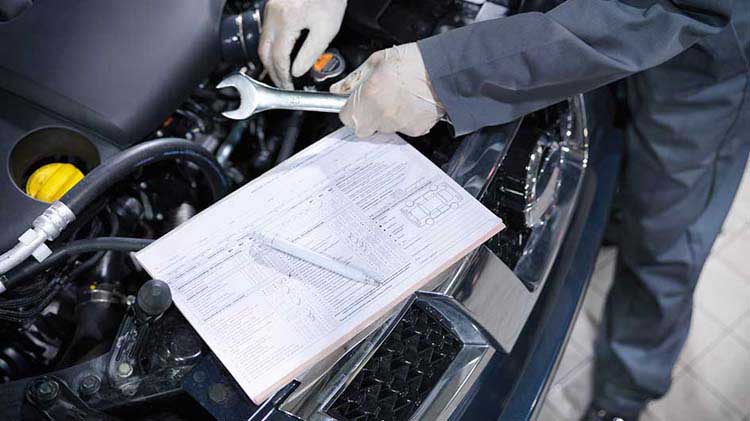
An airbag malfunction can show up as an SRS/airbag light that stays on, a message on the dash display or a light that comes on intermittently. Do not ignore it. Your airbags and seat belt pretensioners may not activate correctly in a crash. Schedule a diagnostic check with a qualified repair facility and ask whether any recalls apply before paying for repairs.
Recalls and why they matter for airbag safety
Airbag recalls can involve inflators or other parts that may not perform correctly in a crash. Check your vehicle identification number (VIN) on NHTSA’s recall page for any open recalls and follow the repair instructions right away. Recall repairs are typically performed at no cost to you. Keeping up with recalls is one of the fastest ways to improve airbag safety in an older vehicle.
Should you ever disable airbags?
Only if your vehicle supports a manufacturer/NHTSA-approved on-off switch. Don’t improvise or bypass the system. Disabling an airbag can increase the risk of severe injury or death in a collision, so it should be rare and based on real need, not preference. NHTSA describes limited situations where an on-off switch may be appropriate, such as when a driver cannot sit at least 10 inches from the steering wheel airbag, or when a child must ride in the front seat because there is no back seat or no safe alternative. If your vehicle has an on-off switch, follow the vehicle instructions and NHTSA guidance and consider professional help so the system is handled correctly.
FAQs on airbags
- Do airbags replace seat belts? No. Airbags are designed to supplement seat belts.
- Can airbags hurt you? Yes. They deploy very quickly and can cause abrasions (“rug burn”) even with proper positioning. They also release gas and a powder that can look like smoke and irritate eyes or skin; being unbelted or too close increases injury risk.
- Why is the back seat safer for kids? Kids are smaller, and front airbags can strike them with dangerous force. NHTSA recommends children under 13 ride properly restrained in the back seat when possible.
- What should I do if the airbag light is on? Have the system checked soon. The warning light can indicate an airbag/SRS problem and the system may not work correctly in a crash. Also check for recalls using your VIN.
- How do airbags affect your insurance rates? Some insurers offer discount for certain safety features, which may include airbags. Eligibility and discount amounts vary, contact your local agent to confirm what discounts may apply.
You can get an auto insurance quote now, or give us a few details and a State Farm® agent will reach out to you.
This content was developed with the help of AI and reviewed by State Farm editors.
The information in this article was obtained from various sources not associated with State Farm® (including State Farm Mutual Automobile Insurance Company and its subsidiaries and affiliates). While we believe it to be reliable and accurate, we do not warrant the accuracy or reliability of the information. State Farm is not responsible for, and does not endorse or approve, either implicitly or explicitly, the content of any third-party sites that might be hyperlinked from this page. The information is not intended to replace manuals, instructions or information provided by a manufacturer or the advice of a qualified professional, or to affect coverage under any applicable insurance policy. These suggestions are not a complete list of every loss control measure. State Farm makes no guarantees of results from use of this information.
Discounts and their availability may vary by state and eligibility requirements.
State Farm Mutual Automobile Insurance Company
State Farm Indemnity Company
Bloomington, IL
State Farm County Mutual Insurance Company of Texas
Richardson, TX