
How to financially prepare for a baby
Consider putting these to-dos on your list to get ready for a baby.
Whether you have a little one on the way or are planning for one, there’s no better time to start preparing than now. Getting your finances in order can help reduce stress and allow you to focus on taking care of the newest addition to your family. Check out the following ideas and strategies on saving for a baby.
Create or add an emergency fund
When creating a baby checklist, start with a budget for emergencies to account for the additional costs of raising a child. Adjust your monthly budget to accommodate increased spending and decreased savings. Ideally, you should have three to six months of expenses saved; if possible, try to save up to nine months of expenses.
Adjust your budget
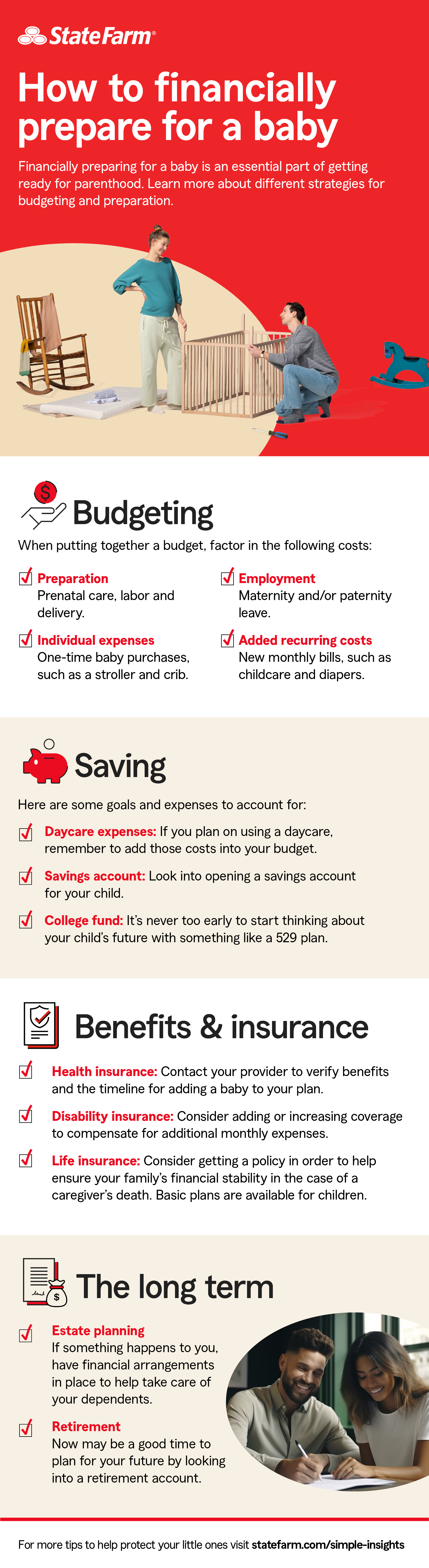
Analyze your current budget and consider how you could financially prepare for a baby. Additionally, when creating a list of necessities for your newborn, factor in these associated costs:
- Preparation – prenatal care, birth and delivery.
- Individual expenses – one-time baby purchases, such as a stroller and crib.
- Employment – maternity and/or paternity leave.
- Added recurring costs – new monthly bills, such as childcare and diapers.
Once you compare your monthly income and calculate ways to save money, you can identify and allocate any extra money to your new expenses or emergency fund. Think about setting a monthly savings goal and try to stick to it.
How to save for your baby
Here are some goals and expenses to account for when thinking about your baby’s future.
- Daycare expenses – if you are planning to go back to work after your baby is born, look at daycare or babysitting expenses and consider incorporating those on your financial plan.
- Savings account – look into opening a child’s bank account to begin saving on your kids’ behalf. This might be a good place to deposit money gifted to them for birthdays and holidays when they are young. It can also be a starting point to begin teaching them about financial habits when they are older.
- College fund – when saving money for a baby, it's never too early to start thinking about your child's future by opening a college fund. Speak to a financial professional to see what plans might fit your needs and what’s possible.

Look at your benefits
Health Insurance
Contact your health insurance provider to verify benefits and the timeline for adding a baby to your plan. You don't want to miss the deadline. If you do, you may have to wait until the next open enrollment period. This is a good time to review your beneficiaries as well. You'll also want to start researching and find an in-network pediatrician.
Disability insurance
Review your plan and consider adding or increasing coverage to compensate for additional monthly expenses. It is an important consideration when you have dependent children. Disability insurance can help protect your family’s financial stability by providing money for essentials if you’re unable to work due to sickness or injury.
Adjust your life insurance
Life insurance can offer a potential increase in financial stability for a family in the case of a caregiver’s death. Consider getting life insurance coverage if you don't already have a policy. A term life insurance policy can be affordable for your needs and can help contribute to the financial security of your growing family. Basic plans are available for children as well.
Start your estate planning
Life can be unpredictable. Planning for the unexpected is part of a parent’s job. Preparing financially for a baby can also include estate planning so if anything happens to you, financial arrangements are in place to help take care of your dependents. To start estate planning, consider looking at different types of wills and trusts and think about what you want out of your estate arrangements.
Look into retirement
If you haven’t begun looking into retirement accounts and planning, now may be a good time. As you review your budgets and determine how to save for a baby, consider budgeting for your retirement as well. An early step towards your retirement goals can be to learn about different retirement accounts and to consider one that is right for your needs.
Keep baby paperwork in mind
Expect a lot of paperwork. Having an organized file folder or binder can be handy when you need to reference a document at a moment's notice. Additionally, consider packing it in your hospital bag.
Generally, the hospital will have parents complete the birth registration form and apply for the baby's Social Security number. If your baby is not delivered in a hospital, your doctor can help obtain a birth certificate, and you can apply for the Social Security card in person at your local Social Security office or at ssa.gov.
Financially preparing for a new baby is no small task, but there are many resources to help make the process smoother. Don’t lose sight of financial planning: Determine the right budget for your situation. Good luck and best wishes to you and your growing family!
The information in this article was obtained from various sources not associated with State Farm® (including State Farm Mutual Automobile Insurance Company and its subsidiaries and affiliates). While we believe it to be reliable and accurate, we do not warrant the accuracy or reliability of the information. State Farm is not responsible for, and does not endorse or approve, either implicitly or explicitly, the content of any third-party sites that might be hyperlinked from this page. The information is not intended to replace manuals, instructions or information provided by a manufacturer or the advice of a qualified professional, or to affect coverage under any applicable insurance policy. These suggestions are not a complete list of every loss control measure. State Farm makes no guarantees of results from use of this information.
Neither State Farm nor its agents provide tax or legal advice. Please consult your tax, legal, or investment advisor regarding your specific circumstances.