Backyard swimming pool safety: Essential tips, equipment and fencing
Learn essential backyard pool safety equipment, pool fencing ideas, pool safety rules and emergency steps for a safer pool season.
Overview: Backyard pool safety is essential for every homeowner with an in-ground, above-ground or portable swimming pool. Ensuring a safe pool environment involves installing proper pool fencing and safety equipment such as alarms and covers, practicing vigilant supervision, teaching swimming skills and establishing clear pool safety rules. By layering physical barriers, educating swimmers and preparing for emergencies with rescue tools and CPR training, families can help reduce the risk of drowning and pool-related accidents. Regular maintenance and adherence to local regulations further enhance safety, making your backyard pool a secure and enjoyable space for everyone.
Owning a backyard swimming pool is a wonderful way to enjoy your home, but it comes with important responsibilities to keep everyone safe. This guide covers what you may need to know about backyard pool safety, including must-have swimming pool safety equipment, pool fencing ideas and critical safety tips to help protect your loved ones.
Why backyard pool safety matters
More than 10 million residential swimming pools exist in the United States and just over 300,000 public/commercial pools. While swimming pools are common, they pose a serious risk. Drowning is a leading cause of death for children, especially among children ages 1-4, and nonfatal drowning can still lead to long-term health problems. Prevent Child Injury also notes that in the summertime in the U.S., a child drowns in a portable pool about every five days. That’s why pool safety is essential.
Must-have swimming pool safety equipment
To help create a safe pool environment, consider investing in the following pool safety equipment:
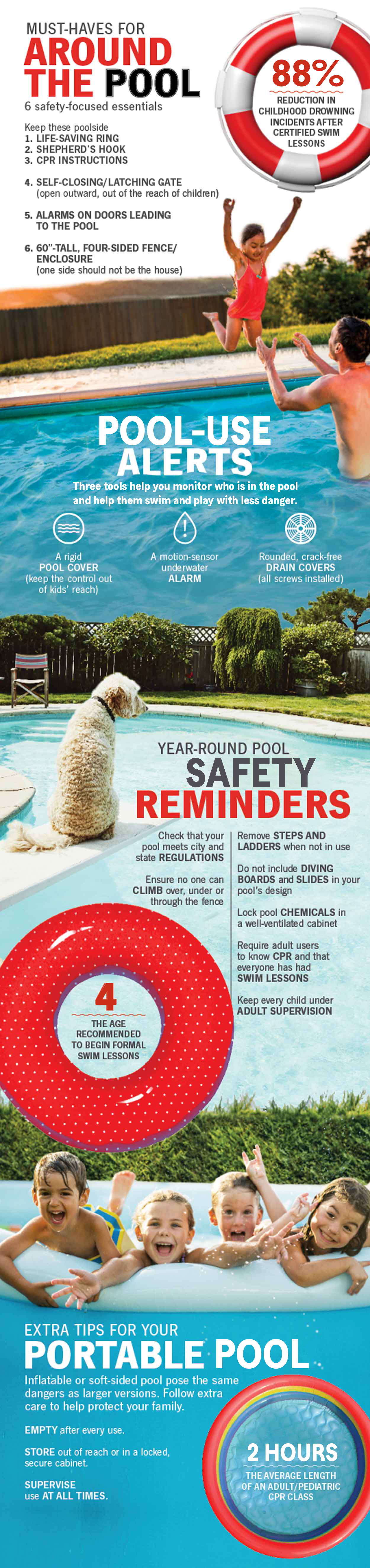
- Pool fencing — at least 60 inches tall, four-sided fence with a self-closing, self-latching gate that opens outward and is out of reach of children. Avoid using the house as one side of the fence.
- Pool safety covers — rigid safety covers help prevent accidental falls into the water when the pool is not in use.
- Pool safety alarms — door alarms, pool alarms and motion-sensor underwater alarms can alert you if someone enters the pool area or water unexpectedly.
- Life-saving equipment — keep a life ring and a shepherd’s hook poolside.
- Drain covers — ensure all drain covers are rounded, crack-free and securely screwed in to prevent entrapment.
- Pool safety rules signage— post clear pool safety rules with CPR instructions to remind everyone of safe practices.
Pool fencing ideas and tips.
Pool fencing can be one of the most effective ways to prevent accidental drownings. Here are some pool fencing ideas to help enhance your backyard safety:
- Use durable, climb-resistant materials such as aluminum, steel or mesh.
- Choose fencing that still allows good visibility into the pool area.
- Ensure the fence forms a complete barrier around the pool and that gaps are blocked.
- Add an alarm to the gate and consider additional alerts for the door leading to the pool area.
Remember, fences around pool areas are often required by local laws, check your city and state regulations.

Supervision, skills, barriers and emergency prep
A safe, enjoyable pool day starts with a clear plan. Follow these backyard swimming pool safety tip to build layers of protection, grow swimming skills and prepare for emergencies.
Supervision that stays focused
Active, eyes-on supervision is the heart of pool safety. Drowning can be silent and quick, even in shallow water. Keep a responsible adult within arm’s reach of young swimmers and maintain steady visual contact with older kids and teens. When hosting, assign a dedicated Water Watcher who focuses only on pool safety for 15–30-minute shifts.
Set simple pool safety rules before swimming begins, such as no running, no diving in shallow areas, swimming with a buddy and staying out during storms.
Build water skills with practice
Swimming lessons for all ages improve confidence and safety. Teach kids safe entry and exit, floating, treading water and how to respond if they fall in. Reinforce that pool toys and floaties are not life-saving devices, use Coast Guard–approved life jackets as needed.
A case-control study published in JAMA Pediatrics found that children ages 1-4 who participated in formal swimming lessons had about an 88% lower risk of unintentional drowning.
Layer on barriers and safety features
- Install a four-sided pool fence that meets the 60 inches barrier standard and includes self-closing, self-latching gates.
- Use a safety-rated pool cover when the pool is not in use.
- Add door, gate and surface alarms for extra awareness.
- Ensure good lighting around the pool area for evening use.
Emergency preparation made simple
Have a clear emergency plan that every caregiver knows, including who calls 911 and where rescue tools are stored. Keep rescue equipment like a reaching pole, ring buoy and first aid kit poolside. Learn CPR and first aid and refresh regularly.
Year-round pool safety maintenance
Pool safety is a year-round commitment. Maintain your pool and safety equipment regularly:
- Schedule annual professional pool inspections.
- Check that fences and gates are intact and functioning properly.
- Lock pool chemicals in a secure, well-ventilated cabinet.
- Keep pool safety equipment accessible and in good condition.
- Regularly review and reinforce pool safety rules with family and guests.
Special considerations for portable pools
Portable pools, including inflatable and soft-sided pools, carry similar risks:
- Always empty portable pools after use.
- Store pool equipment securely out of children's reach.
- Supervise at all times during use.
Pool safety tools at a glance
Four-sided fence
Helps limit unsupervised access
Check latch height and closing action monthly
Safety cover
Secures pool when not in use
Inspect straps and anchors, keep cover tensioned
Alarms (doors, gates, surface, wearable)
Alerts when someone enters pool area or water
Test weekly, replace batteries as scheduled
Rescue pole and ring buoy
Helps reach or pull someone to safety
Store within arm’s reach, inspect for damage
Good lighting
Improves visibility at night
Replace bulbs and clean fixtures regularly
Make safety part of your routine
Focused supervision, steady skill-building, solid barriers and a clear emergency plan create dependable layers of pool safety. Start with the basics, watch the water, fence and cover your pool, keep rescue tools on hand and build from there. These pool safety tips help make it easier to enjoy your backyard.
Need help with homeowner’s coverage?
Curious how safety features and pool safety might connect to your homeowner’s insurance or liability? A local State Farm agent can walk you through coverage options and help you match protection to your backyard lifestyle. Reach out when you’re ready to discuss next steps and make pool safety part of your everyday routine.
This content was developed with the help of AI and reviewed by State Farm editors.
The information in this article was obtained from various sources not associated with State Farm® (including State Farm Mutual Automobile Insurance Company and its subsidiaries and affiliates). While we believe it to be reliable and accurate, we do not warrant the accuracy or reliability of the information. State Farm is not responsible for, and does not endorse or approve, either implicitly or explicitly, the content of any third-party sites that might be hyperlinked from this page. The information is not intended to replace manuals, instructions or information provided by a manufacturer or the advice of a qualified professional, or to affect coverage under any applicable insurance policy. These suggestions are not a complete list of every loss control measure. State Farm makes no guarantees of results from use of this information.
State Farm Fire and Casualty Company
State Farm General Insurance Company
Bloomington, IL
State Farm Florida Insurance Company
Orlando, FL
State Farm Lloyds
Richardson, TX