09.18.2017
New Survey Says Parents Not Playing It Safe With Car Seats
20 years after landmark research partnership, more education and awareness still needed
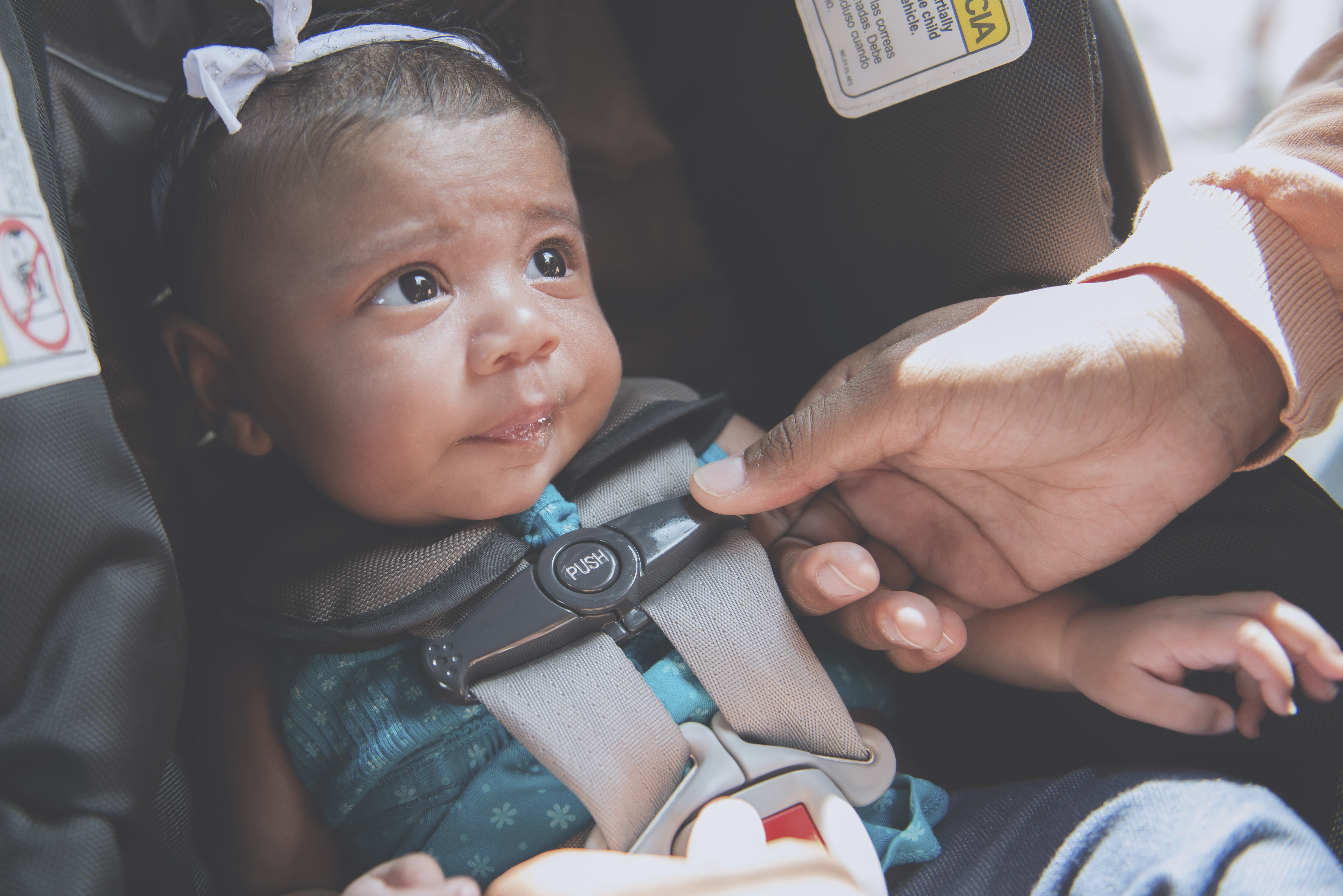
Baby girl in seat
Baby girl in her car seat
Release Highlights
- A majority of parents are not practicing proper car seat safety, according to a recent survey by State Farm®.
- It is the 20 year anniversary of the landmark car seat safety research partnership between State Farm and The Children's Hospital of Philadelphia®.
- September 17-23 is National Child Passenger Safety Week.
One of the most dangerous places for a young child is a motor vehicle. Yet, a majority of parents are not practicing proper car seat safety, according to a recent survey by State Farm®.
State Farm conducted an online survey of parents to gauge car seat safety behavior and knowledge. One of the more eye-opening findings, less than half of parents (44 percent) surveyed kept their child rear-facing until two years of age or longer.
“In a crash, rear-facing seats better support the head, neck and spine of infants than forward-facing seats,” shared Chris Mullen, Director of the Technology Research Division at State Farm. “Correctly secured in their car seats, children are much more likely to avoid serious injuries.”
Also troubling, less than a quarter of parents took advantage of a free resource provided by Safe Kids Worldwide certified community-based experts. Only 23 percent of parents had a certified Child Passenger Safety Technician (CPST) check their car seat installation and usage.
Michele Ice, an Atlanta-area firefighter, attended a car seat check nearly 18 years ago with her ten-month old, Brooke. The car seat tech found several installation mistakes. Weeks later, mother and daughter were in a car crash. Brooke Ice was unscathed thanks to the proper car seat installation. Michele Ice was left in a coma. After months of rehabilitation, she eventually recovered.
“It was embarrassing to find out that I had it installed all wrong. But those 45 minutes of the car seat check saved my daughter’s life,” Michele Ice said.
Two-thirds of parents (68 percent) did not anchor the top tether of the forward-facing car seat to the back of the vehicle seat. More men (39 percent) did anchor than women (25 percent).
“Without the top tether, in the event of a crash, the seat could move forward several inches, putting the child at greater risk of serious injuries,” Mullen stated.
Michele Ice is now a CPST Instructor herself and often sees other parents making common mistakes; especially not using the top tether for forward-facing seats.
“It can save a life! It's up to us as parents and caregivers to research, educate and protect our precious cargo in our motor vehicles,” shared Michele Ice.
Additional stats from the survey (full report):
- Nearly a quarter of parents (23 percent) moved their child out of a booster seat because they felt the child was big enough.
- Only one-third of parents checked safety websites (e.g. Safe Kids, State Farm) to be certain it was time to move their child out of a booster seat.
- Only 32 percent of parents removed bulky clothes like winter coats before buckling (24 percent men vs. 40 percent women).
- Bulky clothing will not allow the parent to get the harness tight enough.
- Two out of three parents did not register their car seat with the manufacturer.
- Without registration, they would not receive notifications of recalls.
- Less than half of parents knew car seats have expiration dates.
- Car seats, like many products, degrade over time and will no longer protect the child as intended.
- Ten percent of parents bought or used a second-hand car seat. For parents under 35, the number was even higher. One in five younger parents used or bought a second-hand car seat.
- With a second-hand seat, you may not know the seat’s history (whether it has been in a crash, has expired or was registered).
Car seat safety has come a long way but there’s room to improve
In 1997, the number one killer of children up to four years old was motor vehicle crashes. In 2017, that is no longer the case. Child occupant (ages zero to four) deaths have been reduced by 15 percent. Motor vehicle crashes are still a leading cause, but no longer the leading cause.
A major reason for the improvement? Twenty years ago, State Farm joined forces with the Children’s Hospital of Philadelphia® (CHOP) and the University of Pennsylvania to create Partners for Child Passenger Safety (PCPS).
State Farm and CHOP identified more than 600,000 crashes involving 875,000 children under age 16. It was the largest source of data ever collected on children involved in motor vehicles crashes.
“The data supported legislative measures that has saved thousands of children’s lives and reduced the severity of injuries for tens of thousands of children,” shared Dennis Durbin, AVP and Chief Clinical Research Officer at CHOP who was Co-Principal Investigator of PCPS. “It was a remarkable win for public health.”
“As we celebrate the 20th anniversary of Partners for Child Passenger Safety, it’s important to look at the accomplishments. At State Farm, we are immensely proud of PCPS and its results. Children have been saved,” shared Mullen. “But during Child Passenger Safety Week and every other day of the year, we cannot lose sight of the fact that we can still do more for our children. Studies have found car seat misuse at 72 percent. This survey reflects that data and drives home the point - we need more car seat safety education and awareness.”
About the survey:
In August 2017, State Farm Strategic Resources Department conducted an online survey of U.S. consumers ages 18 and over. Survey responses were received from 193 parents (93 men and 100 women) who reported that they “have children under the age of 13." The full report is available.
About Us
For over 100 years, the mission of State Farm has been to help people manage the risks of everyday life, recover from the unexpected and realize their dreams. State Farm Mutual Automobile Insurance Company and its affiliates are the largest providers of auto and home insurance combined in the United States. Its more than 19,000 agent offices and over 62,000 employees serve over 96 million policies and accounts – including auto, fire, life, health, commercial policies and financial services accounts. Commercial auto insurance, along with coverage for renters, business owners, boats and motorcycles, is also available. State Farm Mutual Automobile Insurance Company is the parent of the State Farm family of companies. State Farm is ranked No. 32 on the 2026 Fortune 500 list of largest companies. For more information, please visit http://www.statefarm.com.
For inquiries from reporters and media organizations, please visit: State Farm® Media Inquiries