

Create a business natural disaster plan to protect your employees, secure assets and resume operations.
An interruption to your business after a loss event can cause significant financial impact due to halted operations, lost revenue, and ongoing expenses. Effective risk management helps minimize these impacts by identifying potential threats, implementing preventive measures, and being proactive. By preparing business continuity plans for emergencies and disasters, small business owners can recover more quickly and reduce the overall disruption to their business.
The Insurance Institute for Business & Home Safety has developed a free, comprehensive business continuity toolkit to help you get started. Open For Business-EZ is designed to help even the smallest businesses focus on planning for any type of business interruption, so they can quickly re-open and resume operations following a disaster.
Open for Business — Business continuity toolkitExplore additional free resources from IBHS and Hartford Steam Boiler to help you develop a plan for disaster protection and recovery, to better withstand the consequences of a business interruption.
Hurricanes before and afterPre-emergency plan and recoveryBusiness protection lessons learned 25 years after Hurricane AndrewProtecting roof-mounted HVAC units from severe weatherIs your small business ready for an emergency?Power outage preparationFlood recoveryReducing wildfire riskPreventative maintenance for your small refrigeration unitElectrical prevention maintenance for small businessesWhen severe winter weather approaches, make sure your business is prepared for the impacts of snow, ice and freezing temperatures. Being proactive will help you respond to the severe weather effects on your building, business personal property and vehicles, equipment and the safety of your employees and customers. Below are some free resources to help you:
Making your business winter readyHow to remove snow from the roofWhat winter weather means for drivingWinter car tipsRestaurants - Preventing avoidable loss from severe winter weatherWhen volatile spring and summer storms are active, make sure your business is prepared for the impacts of lightning, high winds, tornadoes, hail and floods. Being proactive will help you respond to the severe weather effects on your building, business personal property and vehicles, equipment and the safety of your employees and customers. Below are some free resources from the Insurance Institute for Business & Home Safety (IBHS) to help you:
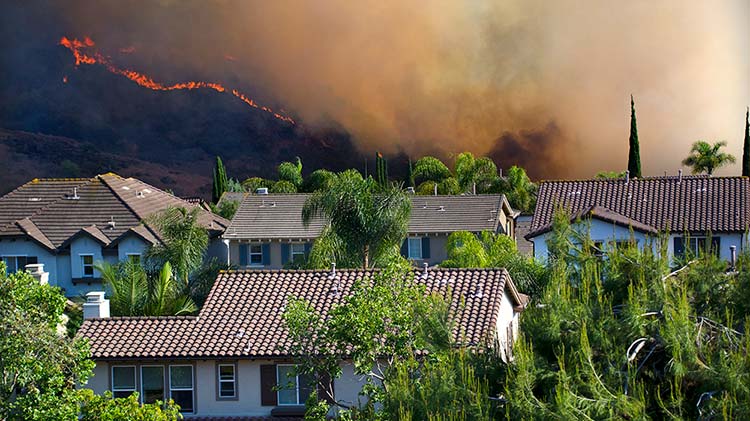
Reduce the risk of tornado damage in commercial structuresReduce flood damage to businessesRoofing the right wayLarge commercial door wind resistance guideLarge commercial door wind resistance checklistApartment communities — preventing damage from thunderstormsSafeguarding office buildings from water intrusion during severe thunderstormsPrepare your business ahead of severe thunderstormsSealing your roof deck to help prevent leaksThe Insurance Institute for Business & Home Safety has developed several free, wildfire loss prevention resources and tools. While there are many things you can do to help protect your business from wildfire, these critical actions are essential to making a meaningful reduction in your company's risk. Together, these steps are the most important and can begin to give your business the best chance of survival.
Make your business wildfire readyFire-resistant landscaping for your businessBusiness pre-evacuation checklistWildfire protection for small businesses in residential style buildingsProtecting small medical facilities from wildfire riskBusiness continuity refers to the planning and preparation that can help ensure an organization can continue to operate and quickly recover after experiencing a disruption or disaster. This includes maintaining essential functions during and after emergencies such as natural disasters, cyberattacks, power outages, or other unexpected events.
In business continuity planning, organizations should consider a wide range of risks and threats that could disrupt operations. Key types include:
By assessing and planning for these varied risks, businesses can develop comprehensive strategies to maintain essential functions and recover quickly from disruptions.
This answer was drafted with the assistance of Artificial Intelligence.
Creating an effective business continuity plan (BCP) involves a systematic approach to ensure that a business can continue critical operations during and after a disruption. Refer to the Open for Business continuity toolkit.
Take advantage of what we’ve learned about small business through the years in Simple Insights. Here, you can discover advice on safety, natural disaster planning, maintenance and repair, and more.
The information provided herein was obtained through various sources. While we believe it to be reliable and accurate, we do not warrant the accuracy or reliability of the information. These suggestions are not a complete list of every loss control measure. The information is not intended to replace manuals or instructions provided by the manufacturer or the advice of a qualified professional. Nor is it intended to effect coverage under any policy. State Farm makes no guarantees of results from use of this information. We assume no liability in connection with the information nor the suggestions made.
State Farm (including State Farm Mutual Automobile Insurance Company and its subsidiaries and affiliates) is not responsible for, and does not endorse or approve, either implicitly or explicitly, the content of any third-party sites hyperlinked from this page. State Farm has no discretion to alter, update, or control the content on the hyperlinked, third-party site. Access to third-party sites is at the user's own risk, is being provided for informational purposes only and is not a solicitation to buy or sell any of the products which may be referenced on such third-party sites.
All claims investigations are based on the individual facts of loss, and coverage decisions are based on the specific terms and conditions of the policy.