Do you need earthquake insurance if you don't live on the coast?
You can't assume traditional homeowners insurance will reimburse damages after a tremor.
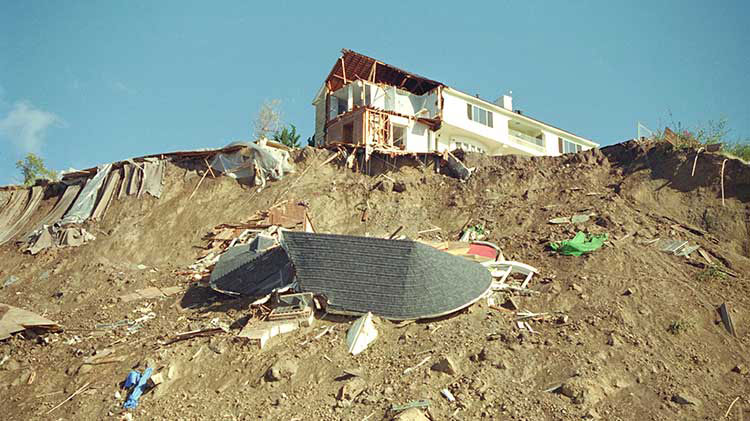
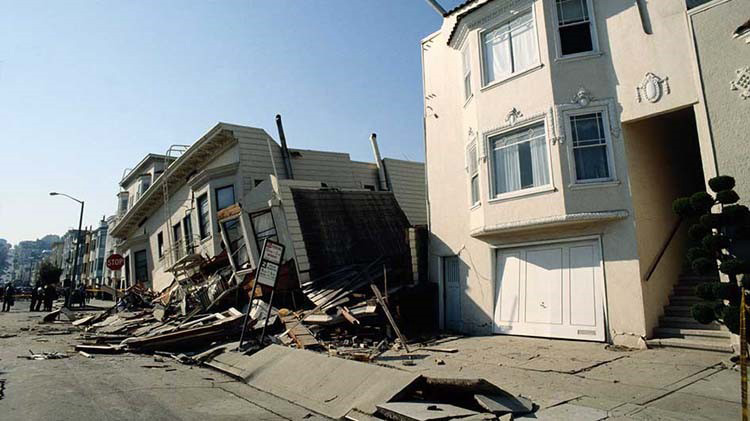
Many people might think that earthquakes are only likely to occur in California. But according to the U.S. Geological Survey (USGS), about 75% of the U.S. could be exposed to earthquakes. With most of the United States potentially exposed for earthquakes, it's important to understand how your homeowners insurance and earthquake insurance work together.
Does homeowners insurance cover earthquake damage?
Many standard insurance policies for homeowners, condo unitowners and renters do not cover damages caused by earthquakes. One exception may be if an earthquake causes a fire, in which case the policy will typically cover the fire damage, but not the earthquake-related damages to structures or property.
Federal and state financial assistance is often available to help families recover from earthquakes, but it typically doesn’t cover all the replacement costs. Even if your neighborhood is declared a disaster area, the Federal Emergency Management Agency (FEMA) may only offer limited assistance through grants and only to those who qualify.
How can I help protect my property in case of an earthquake?
Most insurance companies offer earthquake insurance as an endorsement to a homeowners, condo unitowners or renters policy or as a separate, stand-alone earthquake policy. Depending on statistical and risk-assessment factors, the additional premium will vary by state with rates typically being lower in states with less seismic activity. If you live in California, you can use the California Earthquake Authority’s premium calculator to help determine rates in your area.
What should I look for in an earthquake insurance policy?
Here are some things to consider:
- What's the cost to replace my possessions? Replacement costs for major appliances and other expensive items in your home could add up to a substantial sum.
- Where would I live if my residence were uninhabitable? If your home sustains structural damage, you might have to vacate the premises and stay in a hotel while repairs are being done, or your home is rebuilt.
- How much would it cost to replace my home? Your earthquake coverage should match the level of coverage on your homeowners insurance to help protect you in the event the earthquake causes severe damage to your home.
- What about personal property? Confirm with your insurance company what type of personal property may be covered for earthquake damage and if there are any special coverage limits. Consider getting a personal articles policy for items exceeding the special coverage limit or if they are excluded from earthquake coverage.
How does earthquake insurance work?
It works like a homeowner’s policy. You are responsible for your deductible amount, which will be subtracted from the total amount of the loss. Earthquake insurance deductibles are usually a percentage of your home’s insured value, or in some cases a set amount.
For example, if your house is insured for $300,000 and you have a 10% earthquake deductible, your insurance would only pay the amount of the loss exceeding $30,000. This means minor damage to your home may not meet your deductible, but for extensive damage, earthquake insurance can help protect you from losing much more.
Additionally, some coverages can help pay for damages to your personal property and help with additional living expenses if you cannot live in your house while repairs are being made. Consult with your insurance agent or company for any questions related to earthquake coverage.
What is usually not covered under an earthquake policy?
Here are some common things that are typically not covered:
- Floods — damage caused by flood, even if the flood was caused by the earthquake is typically not covered.
- Fire — resulting damage from a fire caused by an earthquake is typically not covered, but may be covered by a regular homeowners policy.
- Cars — damage to your cars as a result of an earthquake is typically not covered, but can be covered by comprehensive coverage on your auto policy.
- Exterior features — structures like fences, swimming pools, hot tubs and landscaping, among other things, are excluded from coverage.
How to get earthquake insurance in California
Most of the world's biggest earthquakes take place along the U.S. Pacific Coast, stretching from Southern California to Alaska. To help encourage Californians to purchase earthquake coverage, the California Earthquake Authority™ (CEA) was created in 1995. The CEA is a nonprofit, privately funded insurer created by the state's government to help make earthquake insurance more affordable. This policy option is available through most California insurance carriers.
Additionally, if you live within 20 miles of a volcano, take a moment to find out more about how your family can help prepare for and respond to a volcano eruption.
To learn more about earthquake insurance and whether it's available in your area, contact your insurance agent.
The information in this article was obtained from various sources not associated with State Farm® (including State Farm Mutual Automobile Insurance Company and its subsidiaries and affiliates). While we believe it to be reliable and accurate, we do not warrant the accuracy or reliability of the information. State Farm is not responsible for, and does not endorse or approve, either implicitly or explicitly, the content of any third-party sites that might be hyperlinked from this page. The information is not intended to replace manuals, instructions or information provided by a manufacturer or the advice of a qualified professional, or to affect coverage under any applicable insurance policy. These suggestions are not a complete list of every loss control measure. State Farm makes no guarantees of results from use of this information.
This is only a general description of coverages and is not a statement of contract. Details of coverage or limits vary in some states. All coverages are subject to the terms, provisions, exclusions and conditions in the policy itself, and in endorsements.
This article was drafted with the help of AI and reviewed by State Farm editors.
State Farm Fire and Casualty Company
State Farm General Insurance Company
Bloomington, IL
State Farm Florida Insurance Company
Tallahassee, FL
State Farm Lloyds
Richardson, TX